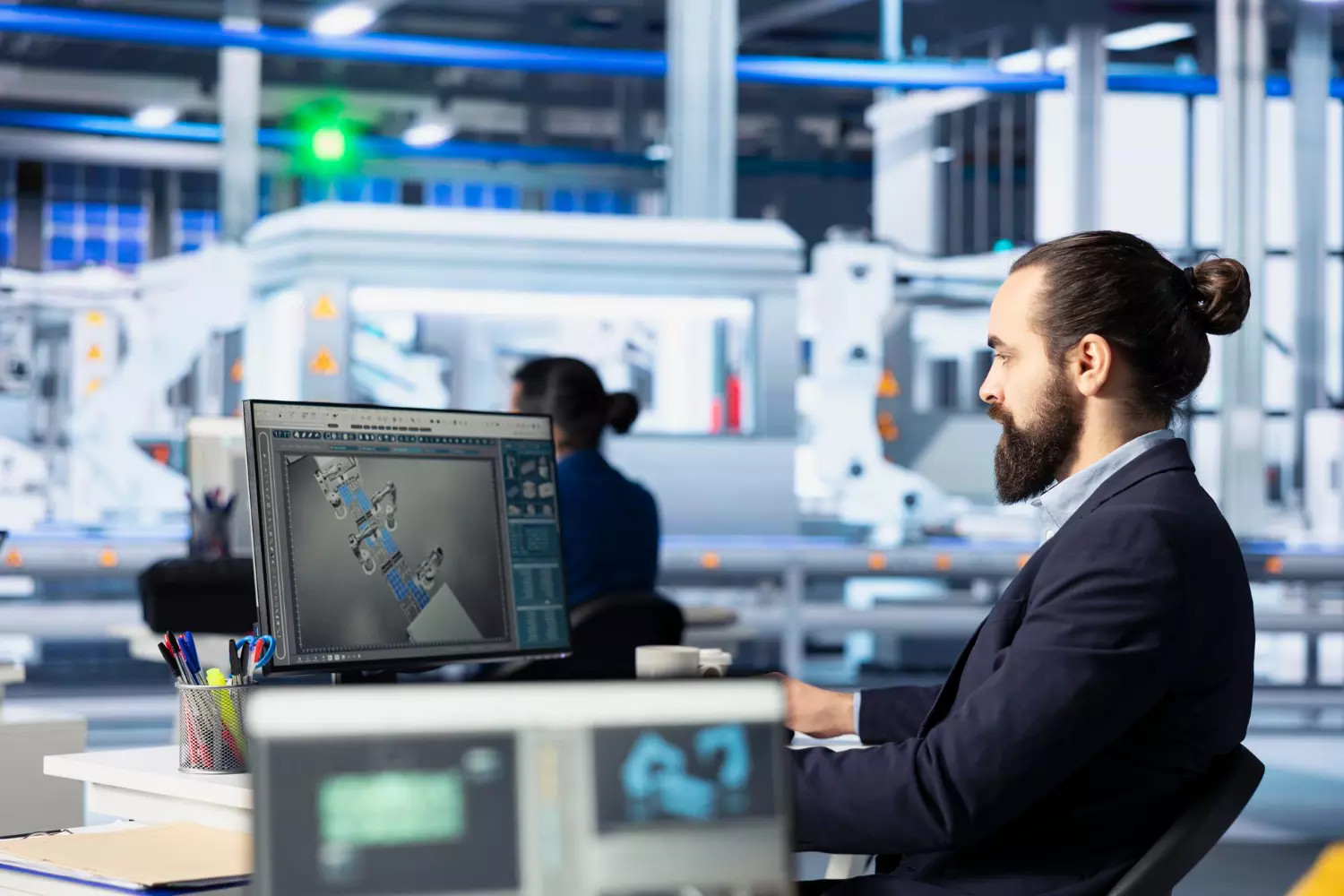
AI-Powered Computer Vision: Driving Efficiency in Manufacturing Operations
Have you ever stood at the edge of a manufacturing line and just watched the chaos unfold into something remarkably orderly? It’s almost hypnotic—the machinery, the speed, the workers gliding between stations like practiced dancers. Now, here’s what most people don’t realize: much of this harmony isn’t just thanks to brilliant engineering or tight schedules. It’s the result of something far more futuristic—something that sees, learns, and reacts without blinking. Welcome to the age of AI-powered computer vision in manufacturing.
The first time I saw this in action was during a factory visit where tablet devices were being assembled. You’d think with all the automation, human errors would be minimal. But small misalignments and surface flaws still slipped through. Then the company installed an AI computer vision system.
What happened next? Defect detection went from random hits to laser precision. Within weeks, waste dropped. Customers started noticing the improved quality. And the factory floor? It felt smarter, more alive, like it was watching itself and learning every second.
So, what exactly is this magical tech?
Computer vision, in simple terms, is a way for machines to “see.” But it’s not just seeing—it’s perceiving and interpreting images or video, understanding what’s happening, and making decisions based on that. Combine this with artificial intelligence and you get systems that aren’t just watching—they’re understanding patterns, learning from data, and responding in real time.
Let’s break it down into the core ways this is making waves in manufacturing:
1. Flaw Detection that Never Blinks
Traditional quality control relies on human inspection. And while humans are great at a lot of things, staring at thousands of nearly identical parts every day isn’t one of them. People get tired. They miss things. It’s inevitable. Enter AI-powered vision systems.
These systems can examine parts at high speed, in microscopic detail, and with near-perfect consistency.
Take BMW, for example. They use computer vision to inspect car paint. Any scratch, swirl, or discoloration is flagged immediately. And because the AI is trained on thousands of images, it doesn’t miss a beat—even on brand-new models.
2. Predictive Maintenance Before Things Break
What if your machines could tell you they were about to break down? That’s what predictive maintenance powered by AI vision can do. Cameras watch for subtle changes in equipment—maybe a belt’s vibrating differently or a motor has a minor leak. The AI detects those patterns before the human eye can.
GE has implemented this to monitor gas turbines. They’re saving millions by fixing problems before they shut down operations. Imagine catching an issue before your entire line goes offline. That’s not just efficiency—that’s a competitive edge.
3. Inventory That Counts Itself
Remember those days when someone had to walk around with a clipboard to count inventory? Yeah, that’s fading fast. With AI vision, inventory can be tracked automatically in real time. Cameras placed around storage areas scan items as they move. They update databases instantly, reducing human error and saving time.
Some manufacturers have even taken it a step further. They integrate vision systems with automated retrieval systems. The result? A warehouse that not only knows what’s in stock but can go grab it too.
4. Worker Safety Without Being Obnoxious
Let’s face it—factory floors can be dangerous. And while nobody wants to feel like they’re being constantly monitored, AI vision can strike the perfect balance between oversight and safety. These systems can detect if someone enters a restricted area, skips wearing safety gear, or gets too close to a hazardous machine.
During the COVID-19 pandemic, vision systems were used to monitor social distancing and mask usage. But even beyond that, they’re now part of injury prevention programs. I heard about one company that installed cameras near heavy robotic arms. Within months, the system prevented several near-misses by alerting operators when humans got too close.
5. Smarter Robots and Automated Processes
Today’s robots are getting eyes—literally. AI vision enables robots to recognize parts, adjust their movements, and even “understand” context. That means more flexibility on the line. A robot that used to only perform one task can now adapt to different products, sizes, or alignments.
Tesla’s factories are a great example. Their robotic systems use computer vision to handle intricate battery assembly. If something’s even slightly off, the robot adjusts. No downtime. No misalignment. Just smooth, continuous production.
6. Real-Time Decision-Making and Adaptability
This one is huge. AI-powered vision isn’t just passively recording things—it’s actively influencing production in real-time. Let’s say a sensor picks up a malformed product. The system can automatically reroute it, notify a supervisor, and adjust the machinery upstream to prevent further errors.
The beauty here is adaptability. It’s not just automation. It’s intelligent automation. And it’s changing how plants respond to issues, making operations more resilient and dynamic.
7. Reduction in Waste and Energy Consumption
Waste in manufacturing isn’t just about raw materials. It’s also about energy, time, and effort. When vision systems catch issues early, entire batches don’t have to be scrapped. Processes can be optimized continuously, and resource usage can be monitored and tweaked on the fly.
One beverage manufacturer used AI vision to track liquid levels in bottles, capping consistency, and packaging alignment. Their waste dropped by 28% in a year. That’s not just a win for the bottom line—it’s a win for the planet.
8. Training the Next Generation of Smart Systems
One of the coolest parts? These systems get smarter over time. Every defect, every correction, every “edge case” feeds back into the AI, helping it learn. So, the more you use it, the better it becomes.
This creates a loop where your system isn’t just reacting—it’s evolving. You’re not managing a static set of rules. You’re guiding a learning partner that adapts to your business.
Job Loss or Job Upgrade?
It’s totally fair to ask, “Is this going to replace people?” But what we’re actually seeing is a shift—not a wipeout. Instead of doing repetitive inspections or manual counts, workers are moving into roles that oversee, analyze, and improve the systems.
Think about it. Would you rather count widgets all day or manage a system that does it for you? This technology is creating new roles—vision system operators, AI trainers, data analysts. It’s not about removing humans. It’s about elevating them.
How to Bring This to Your Factory Floor
Getting started isn’t as overwhelming as it might seem. Here’s a simple playbook:
First, identify pain points. Where are you losing time or money? What processes still rely heavily on human inspection?
Second, start small. Don’t aim to automate the whole floor at once. Pilot a project in one area—say, quality inspection.
Third, train your team. Even if you’re using out-of-the-box solutions, someone needs to know how to interpret the data and tweak the system.
Fourth, pick the right vendor. Look for partners who understand your industry and offer scalable solutions.
Fifth, track and iterate. Use KPIs to measure success—defect rates, downtime, throughput—and refine the system over time.
What’s Coming Next?
This is just the beginning. In the near future, we’ll see more integration with edge computing, allowing systems to make lightning-fast decisions without needing a cloud connection. We’ll also see a rise in self-correcting systems where vision doesn’t just detect the problem—it fixes it instantly with no human involvement.
Custom, on-demand manufacturing powered by vision and AI is also around the corner. Imagine ordering a product online and having it made specifically for you, with AI systems adjusting every step based on your preferences.
Conclusion
The message is crystal clear: AI-powered computer vision in manufacturing isn’t just a trend—it’s a transformative force that’s reshaping everything from the shop floor to the supply chain. From catching defects faster than the human eye, to keeping workers safe, to optimizing every nook and cranny of production, this technology is creating smarter, faster, and more adaptable operations.
Computer Vision in Manufacturing is no longer a futuristic dream—it’s today’s competitive advantage. And for manufacturers willing to embrace it, the payoff is real: lower costs, higher quality, safer environments, and ultimately, a more resilient business model. So, the real question is—are you ready to give your factory a pair of eyes that never blink?
Let’s be honest. The machines are watching. But with AI-powered vision, they’re finally watching for us—not just working blindly.
Frequently Asked Questions (FAQs)
Q1: What is computer vision in manufacturing?
A: Computer vision in manufacturing refers to the use of cameras and AI algorithms to "see" and interpret visual data on the factory floor. This allows machines to detect product defects, monitor equipment conditions, track inventory, and ensure worker safety in real-time.
Q2: How does AI improve defect detection in manufacturing?
A: AI-powered computer vision can scan and analyze thousands of parts per minute, identifying even the smallest defects with high accuracy. Unlike humans, it doesn’t get tired or distracted, resulting in consistent and reliable quality control.
Q3: Can computer vision predict machine failures?
A: Yes. By continuously monitoring equipment for subtle changes—like unusual vibrations or leaks—AI vision systems can identify signs of wear and alert operators before a breakdown occurs, enabling predictive maintenance.
Q4: Is AI computer vision expensive to implement in manufacturing?
A: While initial setup costs exist, prices have dropped significantly in recent years. Many companies start with small pilot projects and scale up. The ROI is typically high due to reduced waste, fewer defects, and less downtime.
Q5: Will computer vision replace factory workers?
A: No. The goal of AI-powered vision is to augment, not replace, human labor. Workers are often retrained to supervise systems, analyze data, and take on higher-value tasks. It's about smarter collaboration between humans and machines.
Q6: What industries use AI computer vision in manufacturing?
A: Industries including automotive, electronics, pharmaceuticals, food and beverage, and logistics are actively using computer vision to improve operations, enhance product quality, and increase safety standards.
Q7: How can I start implementing AI computer vision in my factory?
A: Begin by identifying key pain points (e.g., defect detection or inventory errors). Pilot a vision system in one area, then scale. Choose a vendor with experience in your industry, train your team, and monitor performance metrics.