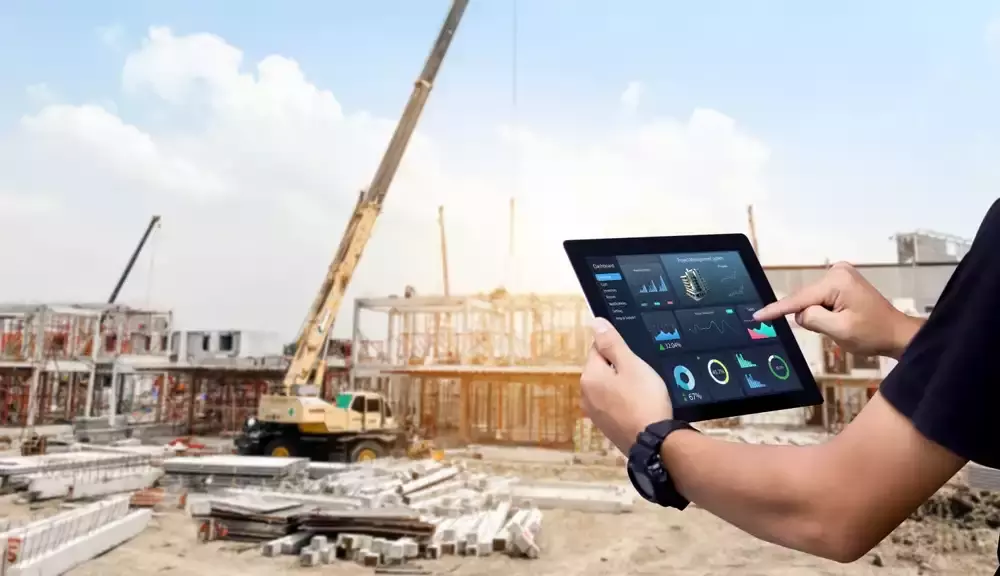
How AI Construction Estimating Software Shapes Estimation Processes
The increasing technical complexity, size, and cost of projects have made construction estimation more complicated. Today's contractors have to cope with the volatile costs of materials, accelerated timelines and specific client demands.
It's complicated and often difficult to keep track of these types of estimations in the traditional way, quickly and accurately.
Digital systems are now essential to modern construction workflow, which manages vast quantities of project data effectively. AI construction estimating software analyzes historical data, including labor costs and material expenses, to provide consistent and accurate estimates.
It eliminates manual calculation mistakes and enhances consistency in various kinds of projects. This allows for quicker, more informed decision-making on planning, budgeting and bidding phases by contractors. This change has enabled making the estimation processes more data-driven and accurate.
Understanding Construction Estimation Processes
What Construction Estimation Involves
Construction estimation involves the process of estimating the total cost of the project before the construction starts. Contractors consider the costs of labor, materials, equipment and overhead.
A correct estimation helps in the correct budgeting and minimises financial risks in execution. It also helps to improve project planning and resource allocation throughout the construction process.
Traditional Estimation Methods
The traditional approaches are still based on spreadsheets, manual calculations and past experience. Such processes can be lengthy. There is a possibility of errors because of missing data or incorrect assumptions.
This means that the overall accuracy in cost planning will be lower. Another challenge with manual estimation is that material and labour rates fluctuate with the market, and that's not an issue that can be resolved by hand.
Role of AI in Modern Estimation Systems
Shift From Manual to AI-Based Estimation
The construction estimating process has moved to automated and data-based systems. Today contractors opt for digital tools to get faster and more accurate results.
AI construction estimating software is a crucial component in the transition from manual estimating processes to intelligent data-driven ones. These systems minimize repetitive calculations and enhance the rate at which these estimates are made.
How AI Processes Construction Data
Cost patterns are identified using the historical project data from the AI systems. They make comparisons between previous projects and requirements.
This will enable contractors to create estimates from actual information and not from assumption. The more data that is analysed, the more accurate the machine learning models are.
Real-Time Cost Evaluation
Construction costs change frequently due to market fluctuations. AI systems track these changes in real time. Contractors receive updated pricing information during estimation stages.
This ensures budgets remain accurate and aligned with current market conditions.
Read: Digital Construction Estimating: How Software Is Revolutionizing
How AI Construction Estimating Software Shapes Workflows
Automating Cost Calculations
Labor, material and equipment cost calculations are automated using AI systems. This helps to save on manual labour.Contractors can create estimates quicker and with reduced errors. Automation also helps to ensure consistency across various projects.
Improving Data Accuracy
The key to estimation success is the accuracy of the data. The AI systems check the data that is entered into it before it is processed. This helps to minimize the chances of human error or omissions in entering data. Having accurate data helps with more effective financial planning and decision-making.
Enhancing Project Forecasting
By examining patterns and trends in costs, AI systems make more informed predictions. They forecast changes in material and labour costs. Contractors have the opportunity to plan ahead for these financial risks.
The ability to leverage structured digital intelligence in estimation workflows for consistency is also evident in modern platforms, such as Constil. Structured and historical data analysis is essential for AI construction estimating software, enhancing forecasting accuracy.
Key Benefits of AI in Estimation Processes
Faster Project Estimation
AI tools save time on making estimates. Contractors can complete bidding processes more efficiently. This enhances productivity in early stages of project planning. Having it done quicker also makes one more competitive in the market.
Improved Budget Accuracy
Proper budgeting helps lower the possibility of going over budget. AI systems offer in-depth financial breakdowns. Contractors get more control of project costs.This helps to maintain the financial stability during the whole construction works.
Better Decision-Making
AI systems supply data-driven insights to contractors. Such understanding helps to make good decisions surrounding projects. Contractors have the option to compare cost options and make their budget decisions. The better the choices, the better the results of the project.
AI Impact on Contractor Estimation Workflow
Bid Preparation Improvements
Structured bid proposals are created by AI systems. These include cost breakdowns, resource planning, etc. This makes it easier to get the client's attention when you're talking.
Resource Allocation Planning
AI tools help contractors manage their labour and equipment distribution. This helps to utilize resources effectively. Well-planning decreases the delays during implementation.
Risk Identification in Estimation
Financial risks are identified at an early stage in the estimation process by AI systems. They identify discrepancies in the cost.
AI construction estimating software improves construction productivity by preventing contractors from facing unforeseen budget challenges.
Conclusion
The landscape of construction estimation has undergone a dramatic transformation thanks to the adoption of AI-powered systems. To address the information complexity of projects, contractors are now turning to intelligent tools to help manage and integrate the data.
Today, contractors use intelligent tools to handle complex project information, enhance accuracy and minimize manual mistakes. These systems enable the quick decision-making and financial monitoring for better control during the planning and execution of projects.
AI construction estimating software is now a vital part of today's construction estimation process, delivering data-driven insights and real-time analysis. With the increasing complexity of construction projects, the use of AI for estimation will continue to be crucial for improving efficiency, accuracy, and the overall success of the construction process.
FAQ
What is AI construction estimating software used for?
It is utilized to determine the costs of a project, to predict budgets, and to analyse construction data. It allows contractors to develop detailed and precise project estimates.
What is the role of AI in boosting the precision of construction estimates?
It minimizes human errors by automating large amounts of data processing. It also utilizes historical data to create more consistent cost predictions.
Can small contractors use AI construction estimation tools?
Yes, they can be scalable, and they can be used for small as well as large projects. They adapt to project size, and estimation is made more flexible and efficient.
What are the key issues with using AI to estimate?
Issues such as data quality, system integration, and user training are often common challenges. Most of the implementation issues can be minimized by proper configuration and use.