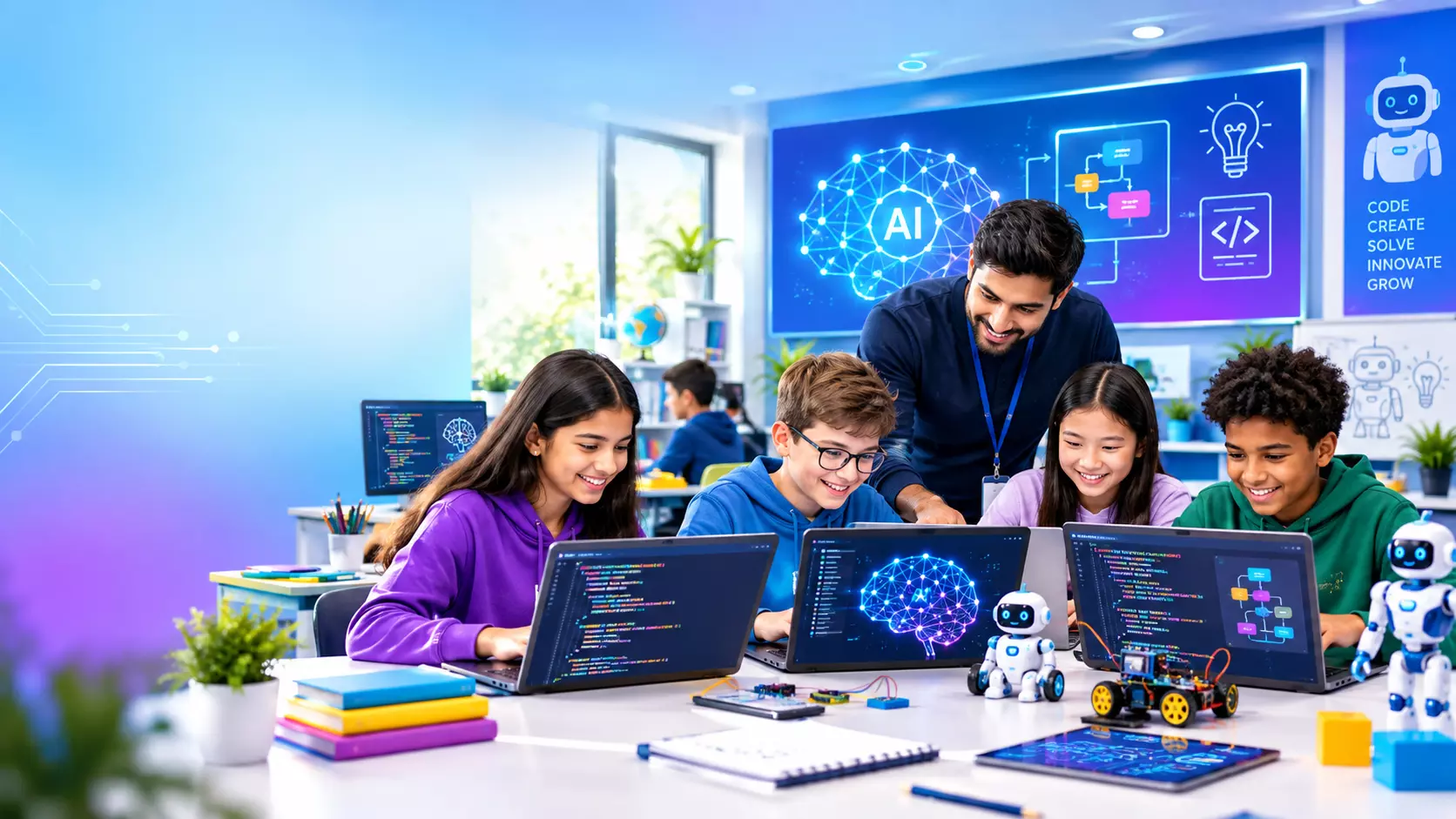
AI Coding Classes for Kids: Learn AI, Coding & Future Skills
Technology is transforming the way children learn, communicate, and solve problems.
As artificial intelligence becomes an increasingly important part of everyday life, introducing children to coding and AI at an early age can help them develop valuable skills for the future.
AI Coding Classes for Kids provide an engaging way for young learners to understand programming, artificial intelligence, logical reasoning, and creative problem-solving.
MasterJi Coding Classes offers an environment where children can explore technology through age-appropriate lessons, hands-on projects, and practical coding activities. Instead of simply memorizing concepts, students are encouraged to experiment, create, and understand how technology works.
What Are AI Coding Classes for Kids?
AI coding classes combine fundamental programming skills with an introduction to artificial intelligence. Children learn how computers follow instructions, process information, recognize patterns, and perform tasks using programmed logic.
Depending on their age and learning level, students may explore concepts such as:
- Basic programming logic
- Algorithms and computational thinking
- Artificial intelligence fundamentals
- Machine learning concepts
- Data and pattern recognition
- Problem-solving techniques
- Interactive coding projects
- Automation and smart technologies
The goal is not to turn every child into a professional programmer immediately. Instead, these classes help children become comfortable with technology while developing skills that can support their academic and personal growth.
Why Should Kids Learn Coding and AI?
Coding is more than writing lines of computer code. It teaches children how to break a large problem into smaller, manageable steps. This process encourages patience, logical reasoning, creativity, and attention to detail.
When children learn AI alongside coding, they also begin to understand how modern technologies make decisions, identify patterns, and respond to information.
Early exposure can help children:
Develop Logical Thinking
Programming requires students to think systematically. They learn that every instruction has a purpose and that problems can often be solved through a series of logical steps.
Improve Problem-Solving Skills
Coding challenges encourage children to find solutions when their first attempt does not work. Debugging teaches them to identify mistakes, test alternatives, and improve their approach.
Encourage Creativity
Coding gives children the opportunity to build their own games, animations, applications, and technology projects. This turns technology from something they consume into something they create.
Build Confidence
Successfully completing a coding project can give children a sense of accomplishment. As projects become more challenging, students gradually become more comfortable tackling unfamiliar problems.
Prepare for Future Technology
Artificial intelligence, automation, and software are becoming increasingly important across many industries. Understanding basic coding and AI concepts can give students useful technological literacy as they progress through school.
How MasterJi Coding Classes Makes Learning Engaging
Children learn differently from adults. Long theoretical explanations may not always capture their attention. Effective children's coding programs therefore combine instruction with activities that encourage participation.
At MasterJi Coding Classes, learning can be structured around age-appropriate concepts and practical applications. Students can gradually progress from basic programming ideas to more advanced topics as their understanding develops.
A typical learning experience may involve:
- Introducing a new coding or AI concept.
- Demonstrating how the concept works.
- Allowing students to experiment independently.
- Solving guided coding challenges.
- Creating a practical project.
- Reviewing mistakes and improving the solution.
This approach helps students understand not only what they are learning but also how and why the technology works.
The Role of Competitive Coding in Children's Development
Once children become comfortable with fundamental programming concepts, competitive problem-solving can provide another way to strengthen their skills. Competitive Coding Classes for Kids focus on solving programming problems within defined rules or challenges.
Competitive coding can encourage students to think quickly and accurately while developing their understanding of algorithms and programming techniques.
These classes can help children practice:
- Algorithmic thinking
- Pattern recognition
- Logical reasoning
- Code optimization
- Time management
- Debugging
- Structured problem-solving
The competitive element can also motivate children who enjoy challenges and goal-oriented learning. However, competition should complement learning rather than create unnecessary pressure.
Read: The Role of Digital Literacy in Digital Inclusion
AI Coding and Competitive Coding: What's the Difference?
AI coding and competitive coding have different primary objectives, although they share several foundational skills.
AI coding focuses on understanding artificial intelligence, machine learning, data, intelligent systems, and related programming concepts. Students may create projects that demonstrate how computers can process information or recognize patterns.
Competitive coding, on the other hand, focuses heavily on solving programming and algorithmic problems efficiently. Students often work on puzzles and challenges designed to test their reasoning and coding abilities.
Learning both can be beneficial. AI introduces children to emerging technologies, while competitive coding can strengthen their algorithmic and problem-solving foundations.
Choosing the Right Coding Program for Your Child
Parents often have many options when searching for technology education. The right program should match the child's age, experience, interests, and learning pace.
Before choosing a program, consider the following factors:
Age-Appropriate Curriculum
Children should learn concepts that are appropriate for their developmental stage. A good curriculum introduces complexity gradually rather than overwhelming beginners.
Practical Learning
Look for classes that include projects, exercises, and interactive activities. Practical learning can make abstract programming concepts easier to understand.
Experienced Instruction
Teachers should be able to explain technical concepts in language children can understand. They should also encourage questions and experimentation.
Progressive Learning
A strong program should allow students to advance from basic concepts toward more challenging topics as their skills improve.
Supportive Environment
Children learn best when they feel comfortable making mistakes. Coding naturally involves debugging, so students should be encouraged to view mistakes as part of the learning process.
What Can Kids Build Through Coding?
One of the most exciting aspects of learning to code is seeing an idea become a working project. Depending on their experience, children can create a wide variety of projects.
Beginners might start with simple animations, interactive stories, or basic games. As their skills improve, they can work on projects involving algorithms, data, AI concepts, or more advanced programming logic.
Project-based learning can help children connect theoretical concepts with real-world applications. It also provides opportunities for them to demonstrate creativity and develop their own ideas.
Building Skills Beyond the Classroom
The benefits of coding can extend beyond programming itself. When children regularly work through coding challenges, they practice persistence, organization, and critical thinking.
For example, a program may initially fail because of a small mistake. Instead of giving up, students learn to examine the code, identify the issue, make a change, and test the result again.
This cycle of attempt, analyze, improve, and repeat is valuable in many areas of education and everyday life.
Coding can also encourage children to become more curious about the technology they encounter every day. They may begin asking how applications work, how recommendation systems operate, or how machines can recognize images and language.
Preparing Kids for a Technology-Driven Future
Children entering today's schools will eventually participate in a workforce where technology is likely to play an important role.
Not every child will become a software engineer or AI researcher, but technological literacy can benefit students regardless of their eventual career path.
Learning coding and AI can help children become informed users and creators of technology. It gives them an opportunity to understand the basic principles behind digital tools rather than simply using those tools without understanding how they work.
MasterJi Coding Classes aims to make this learning journey accessible, engaging, and practical for young learners who are curious about coding and artificial intelligence.
Start the Coding Journey Early
Introducing children to programming does not need to be complicated. With the right guidance, coding can become an enjoyable learning experience that combines creativity, logic, and technology.
AI Coding Classes for Kids can provide a foundation for understanding artificial intelligence while helping children strengthen problem-solving and computational thinking skills.
For students who enjoy challenges, Competitive Coding Classes for Kids can further develop algorithmic reasoning and programming abilities.
With structured learning, practical projects, and consistent encouragement, children can gradually build confidence and discover their potential in technology.
MasterJi Coding Classes provides an opportunity for young learners to explore these skills in an engaging educational environment and take their first steps toward becoming confident creators of tomorrow's technology.