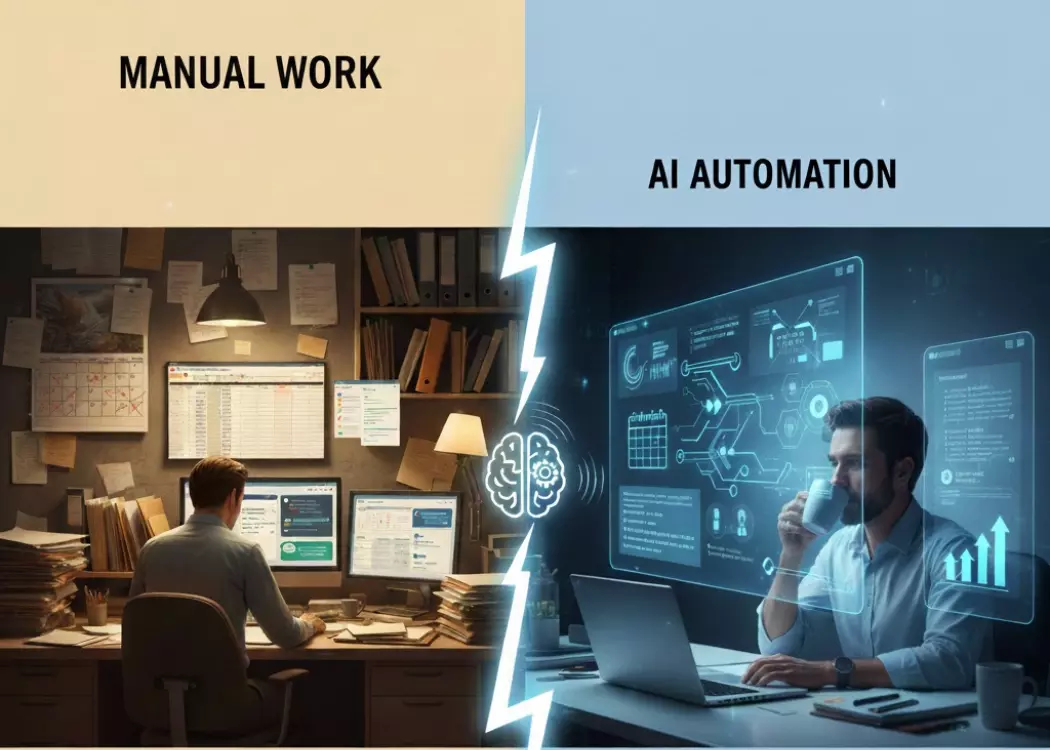
AI Automation vs Traditional Productivity Tools: Key Differences
Productivity tools have always shaped how work gets done. From basic task lists to shared spreadsheets, traditional tools helped teams stay organized and track progress. For a long time, that was enough. But as work has become faster, more distributed, and more complex, many teams have started to feel the limits of manual systems.
This shift has brought AI automation into everyday workflows. Unlike traditional setups that rely on constant human input, AI-driven systems focus on reducing repetitive effort and guiding work more intelligently.
Understanding the difference between these two approaches is essential for choosing tools that truly support productivity rather than adding friction.
Understanding Traditional Productivity Tools
Traditional productivity tools are built around structure and manual control. They include task managers, calendars, document editors, project boards, and communication platforms.
These tools help users plan tasks, record information, and collaborate in an organized way.
Their biggest strength is familiarity. Most people can start using them quickly with little training. They also offer a high level of control, since every action is driven by direct user input.
However, these tools depend heavily on consistency and discipline. Tasks must be updated manually, priorities adjusted by hand, and reports created from scratch.
s workloads increase, this often leads to missed updates, duplicated effort, and time spent managing tools instead of doing meaningful work.
What AI Automation Adds to Modern Workflows
AI automation approaches productivity differently. Instead of waiting for instructions, systems observe patterns, respond to triggers, and handle repeatable actions automatically. AI productivity tools can assign tasks, organize information, summarize updates, and suggest next steps based on real usage.
This reduces the need for constant monitoring. Rather than checking multiple dashboards or reminders, users receive timely inputs that align with their actual work patterns. Over time, workflows become smoother because fewer decisions need to be made manually.
AI automation does not remove human involvement. Instead, it supports focus by handling background work that would otherwise consume attention.
Core Differences That Matter in Practice
Task Execution and Speed
Traditional tools require users to start and complete most actions themselves. AI automation shortens this cycle by handling routine steps automatically, which helps work move faster with fewer interruptions.
Decision Support and Insights
Manual tools show data but rarely interpret it. AI-based systems highlight trends, suggest priorities, and surface risks early, helping users make informed decisions without digging through raw information.
Flexibility and Scalability
Traditional tools often struggle as teams grow. Automation adapts more easily, adjusting workflows as volume and complexity increase.
Consistency and Error Reduction
When work relies on repeated manual input, mistakes are inevitable. Automated workflows follow defined rules, improving accuracy and reliability across tasks.
User Experience and Adoption
At first, traditional tools feel easier because they are familiar. But over time, they demand more attention as work scales. AI productivity tools often require an initial learning phase, yet they gradually reduce mental load once patterns are established.
The long-term experience is different. Instead of managing every step, users focus on outcomes while systems handle routine coordination in the background.
Collaboration and Team Efficiency
Traditional tools support collaboration by providing shared spaces for tasks and documents. However, coordination still depends on people remembering to update information and communicate changes.
AI automation improves team alignment by keeping workflows updated automatically. Status changes, deadlines, and dependencies are reflected without extra effort, reducing confusion and unnecessary follow-ups.
Read: AI Automation Explained: Benefits, Challenges, and the Future
Cost, Value, and Long-Term Impact
Traditional productivity tools often appear more affordable at first. Their real cost shows up later in the form of time spent on manual coordination and rework.
AI automation delivers value over time by freeing hours previously lost to repetitive tasks. Productivity gains are measured not only in speed, but in reduced burnout and better use of skills.
Security, Control, and Trust
Both approaches require strong data protection. Traditional tools offer clear visibility into actions, while automated systems must balance efficiency with transparency.
The most effective AI productivity tools allow human oversight, ensuring users remain in control of important decisions.
Choosing the Right Approach
Traditional tools still work well for simple workflows and small teams. AI automation is better suited for complex, fast-moving environments where manual management becomes a burden. Many organizations benefit from combining both, using automation where it saves time and keeping manual control where judgment matters most.
Conclusion
The difference between AI automation and traditional productivity tools is not about replacing people. It is about how work is supported. Traditional tools organize tasks. AI automation removes unnecessary effort. Choosing the right balance helps teams work with clarity, consistency, and focus as demands continue to grow.