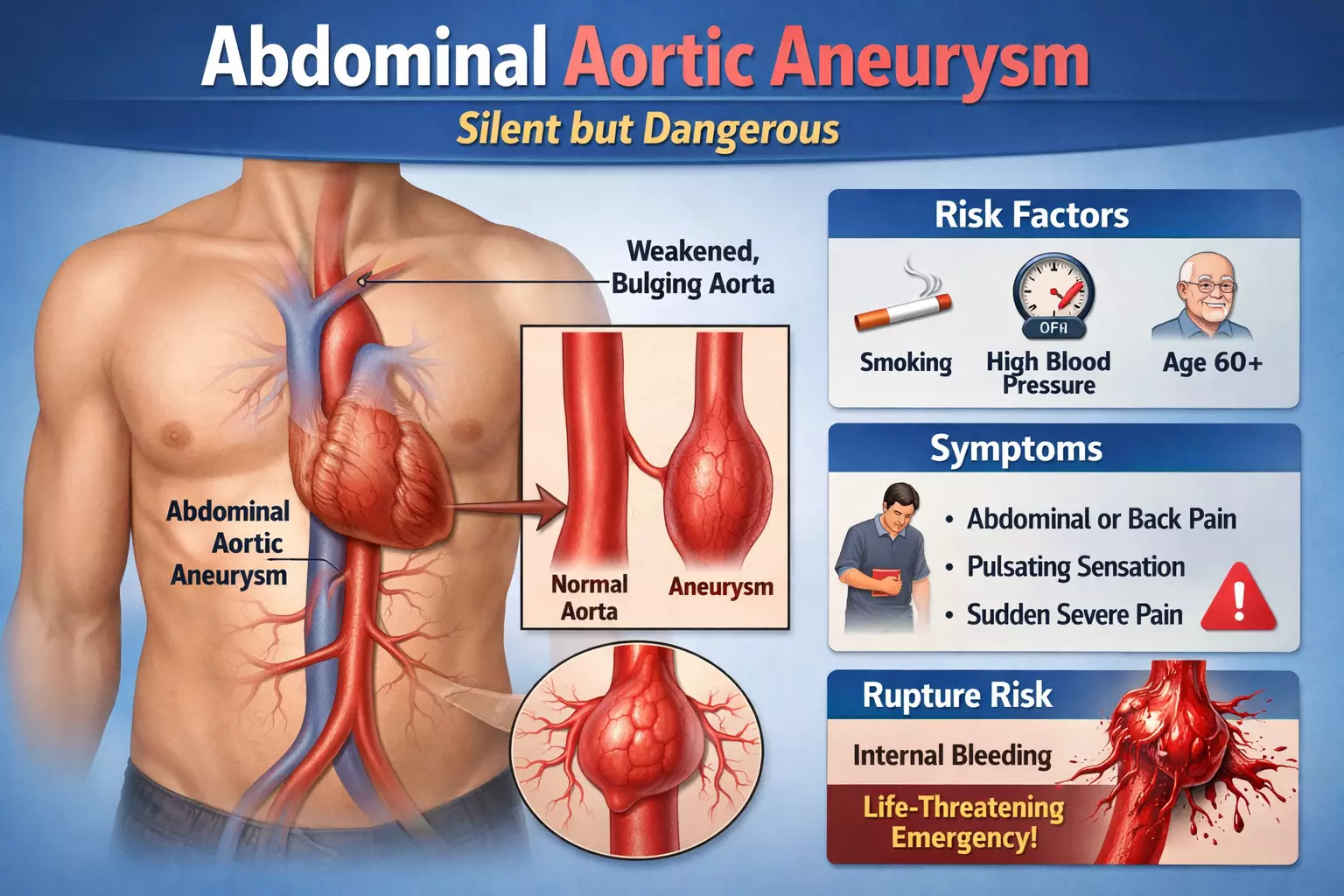
Abdominal Aortic Aneurysm: A Silent Risk That Should Not Be Ignored
An abdominal aortic aneurysm (AAA) is a serious vascular condition in which the lower part of the aorta—the main artery carrying blood from the heart to the body—becomes weakened and enlarged.
In many cases, people are unaware they have an abdominal aortic aneurysm because it often develops without noticeable symptoms. However, if the aneurysm ruptures, it can cause life-threatening internal bleeding.
Understanding abdominal aortic aneurysm early is essential for preventing sudden and severe complications.
What Is an Abdominal Aortic Aneurysm?
An abdominal aortic aneurysm occurs when the wall of the abdominal aorta weakens and begins to bulge outward. Over time, this bulge may increase in size, raising the risk of rupture.
The aorta supplies blood to vital organs and the lower body, so damage to this artery can have serious consequences.
Why Abdominal Aortic Aneurysm Often Goes Undetected
One of the biggest challenges with abdominal aortic aneurysm is that symptoms are usually absent in the early stages. Many aneurysms are discovered incidentally during imaging tests done for other reasons.
When symptoms do occur, they may include:
Persistent pain in the abdomen or lower back
A pulsating sensation near the belly button
Sudden severe abdominal or back pain (sign of rupture)
Dizziness or fainting
A ruptured abdominal aortic aneurysm is a medical emergency requiring immediate care.
Who Is at Higher Risk?
Certain individuals are more likely to develop an abdominal aortic aneurysm, including those who:
Are over 60 years of age
Have a history of smoking
Have high blood pressure
Have a family history of aneurysms
Have atherosclerosis or other vascular diseases
Men are more commonly affected, but women may face higher risks once rupture occurs.
Why Early Detection Is Critical
Detecting an abdominal aortic aneurysm before rupture significantly improves survival. When identified early, aneurysms can be monitored or treated in a controlled and safer manner.
Benefits of early detection include:
Reduced risk of sudden rupture
Opportunity for planned treatment
Lower complication rates
Better long-term outcomes
Screening is especially important for individuals with multiple risk factors.
How Abdominal Aortic Aneurysm Is Diagnosed
Diagnosis typically involves imaging tests that visualize the abdominal aorta and measure the size of the aneurysm. Doctors monitor the aneurysm’s growth rate to determine the risk of rupture and the need for treatment.
Small aneurysms may only require regular follow-up, while larger or rapidly growing aneurysms may need intervention.
Read: Top 10 Foods That Help You Burn Fat Faster
Treatment and Management Options
Management depends on the aneurysm’s size and the patient’s overall health. Options may include:
Regular monitoring for small, stable aneurysms
Blood pressure control to reduce stress on the artery
Lifestyle changes such as smoking cessation
Surgical or minimally invasive repair for high-risk aneurysms
The primary goal is to prevent rupture while minimizing treatment risks.
Patient Intent: When Should You Seek Medical Advice?
Medical evaluation is recommended for individuals with risk factors or unexplained abdominal or back pain. Screening can help detect aneurysms before they become dangerous and allow timely management.
Conclusion
Abdominal aortic aneurysm is a potentially life-threatening condition that often develops silently. Awareness of risk factors, early screening, and proper management can prevent rupture and save lives. Timely medical attention plays a crucial role in maintaining vascular health and preventing emergencies