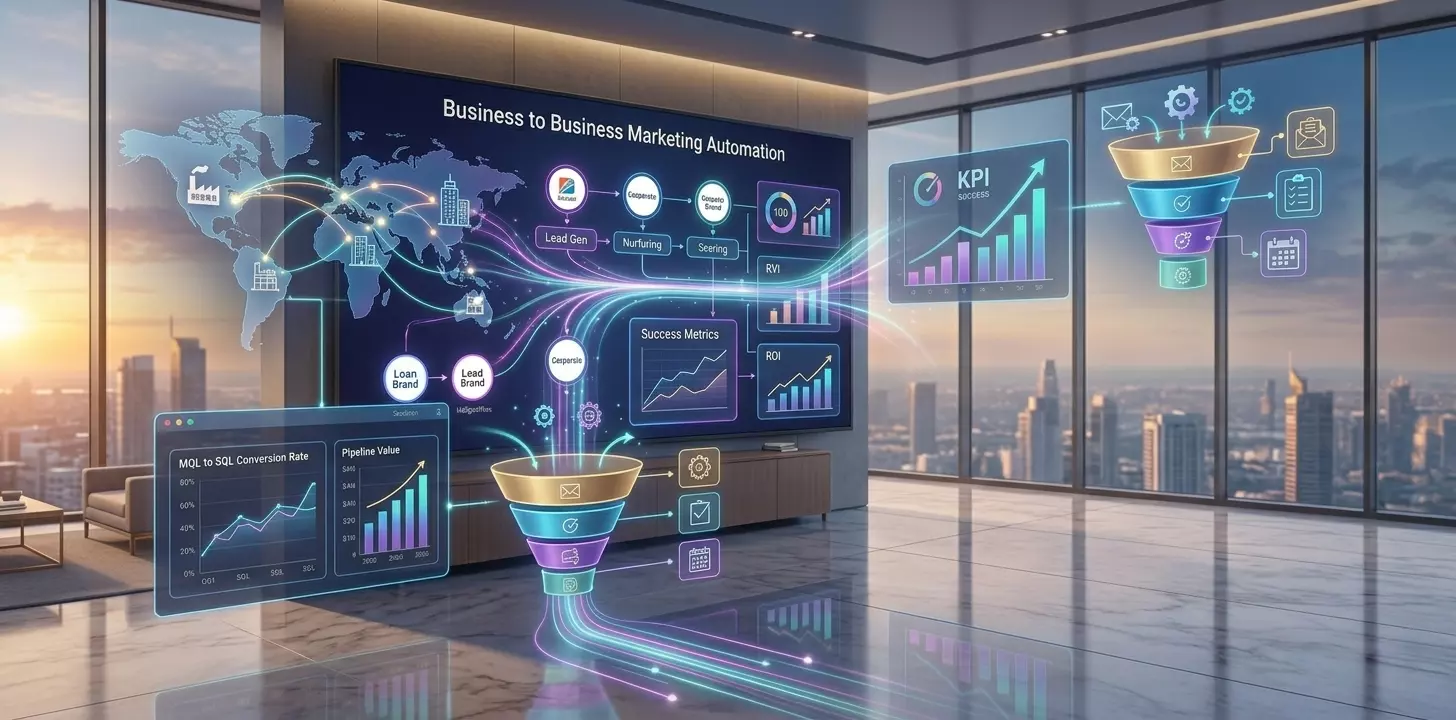
A Step-by-Step Guide to Business to Business Marketing Automation
Most B2B teams don’t struggle because they lack leads. They struggle because they can’t keep up with them. One lead comes in, someone forgets to follow up.
Another downloads a resource, but no one nurtures them. Sales asks for “better quality leads,” while marketing insists they’re already sending enough. It becomes a cycle.
Business to business marketing automation is basically the system that fixes this mess not by adding more work,
but by removing the repetitive parts that shouldn’t be manual in the first place. And when it’s set up properly, it doesn’t feel like “automation.” It just feels like your marketing finally runs on its own without constant babysitting.
At Hivenexis, we often see companies realize the same thing: they don’t need more tools, they need a system that actually connects everything.
So What Is B2B Marketing Automation Really?
- Forget the textbook definition.
- In real terms, it’s just this:
- You set rules once → and your marketing keeps working in the background.
- A visitor comes to your website → they enter a system.
- They read a blog → they get tagged.
- They open emails → their interest level increases.
- They stop engaging → the system adjusts automatically.
- And when they’re finally ready, sales don't start from zero; they already know who this person is and what they care about.
- That’s the real value.
- It’s not “automation for the sake of automation.” It’s about not losing opportunities you already paid for.
Why Everyone in B2B Is Talking About This Now
- A few years ago, B2B marketing was simpler. You ran ads, collected leads, passed them to sales, and hoped for the best.
- That doesn’t work anymore.
- Buyers are more cautious now. They research everything. They visit your website multiple times before even thinking about a call.
- And if your follow-up is slow or irrelevant, they move on.
- That’s where automation quietly became essential not as a trend, but as survival.
- Because manually tracking every interaction across dozens (or hundreds) of leads just isn’t realistic anymore.
What a Proper System Actually Looks Like
- Most people overcomplicate this.
- A working B2B automation setup usually comes down to a few moving parts:
- Your CRM holds everything together: every lead, every interaction, every deal.
- Email flows handle communication, but not in a spammy way. More like: “Here's the next useful thing you should know.”
- Lead scoring quietly ranks interest levels so sales doesn’t waste time guessing.
- Segmentation makes sure people don’t all receive the same message like they’re identical.
- And analytics tells you something very important: what’s actually working versus what just looks good in reports.
- When these pieces connect properly, marketing stops feeling chaotic.
The Step-by-Step Reality
Let’s be honest, most “step-by-step guides” online feel unrealistic. So here’s how it actually works in practice.
Decide what you actually want
Not “increase revenue” in a vague way. Something measurable like more qualified demos, faster sales cycles, or better conversion from cold traffic.
If you skip this, everything else becomes guesswork.
Understand your buyer properly
Not just job titles.
Think about what they’re dealing with internally pressure from management, budget approvals, risk concerns. In B2B, decisions are rarely personal. They’re political inside companies.
Map how people actually buy from you
Not how you want them to buy how they actually do it.
Some people visit your site three times and disappear. Some download everything before talking to sales. Business Automation only works if it reflects reality.
Pick tools that don’t slow you down
This is where teams usually overthink it.
A simple system used properly beats a powerful system used badly.
Clean your data
Nobody likes doing this step, but bad data ruins everything.
Wrong emails, duplicate leads, outdated contacts automation just multiplies the problem faster.
Build one or two strong nurture flows
Start with something simple like:
- new lead welcome flow
- demo request follow-up flow
Make them good before making them complex.
Let leads “prove” their interest
This is where lead scoring becomes useful.
Someone who visits your pricing page three times is not equal to someone who just downloaded a blog PDF.
Expand slowly into multiple channels
Once email works, then you can layer in ads, retargeting, and content sequencing.
Not before.
Watch behavior, not just numbers
Clicks and opens are fine. But what matters is:
- Are leads progressing?
- Are sales conversations improving?
- Are deals closing faster?
Where Things Usually Go Wrong
Most failures in marketing automation aren’t technical.
They’re behavioral.
Companies either:
- automate too early without understanding their audience
- or overcomplicate systems until nobody uses them properly
Another big issue is tone.
A lot of automated messaging sounds like it came from a machine. People notice that instantly especially in B2B where trust matters more than hype.
And then there’s the classic problem: marketing and sales never fully agree on what a “good lead” actually looks like.
That alone can break the entire system.
What Actually Works
- The companies that get this right don’t try to impress anyone with complexity.
- They start small.
- One workflow. One audience segment. One goal.
- Then they refine it until it works consistently.
- They also treat automation as support, not replacement. The human side still matters — especially in B2B where deals are built on trust and timing.
- That’s something we focus heavily on at Hivenexis when helping teams move from scattered marketing efforts to structured systems.
Read: Maximizing Your Online Presence via Social Media Marketing
Where This Is All Going
- We’re heading toward a point where marketing automation won’t feel like a “tool” anymore.
- It’ll just be part of how companies operate.
- AI will handle more decision-making not just sending emails, but deciding who should get what message and when.
- Personalization will stop being a “strategy” and become the default.
- And the gap between marketing and sales will keep shrinking as systems become more connected.
Final Thoughts
- Business to business marketing automation isn’t about replacing effort with software.
- It’s about removing unnecessary effort so teams can focus on work that actually matters strategy, relationships, and closing deals.
- The mistake most companies make is trying to automate everything at once.
- The smarter approach is slower: build a small system, make it work, then expand it.
- That’s where real scalability comes from not tools, but structure.
What is B2B marketing automation in simple words?
It’s a system that automatically handles marketing tasks like follow-ups, lead tracking, and email communication so businesses don’t have to do everything manually.
Do small B2B companies need automation?
Yes, but they should start simple. Even basic email workflows can make a big difference.
Does automation replace human marketing teams?
No. It supports them by handling repetitive tasks so they can focus on strategy and relationships.
What is the biggest benefit of automation?
Consistency. Leads don’t get forgotten, and communication stays timely.
Why do automation systems fail?
Usually because of bad data, overcomplication, or lack of alignment between sales and marketing.