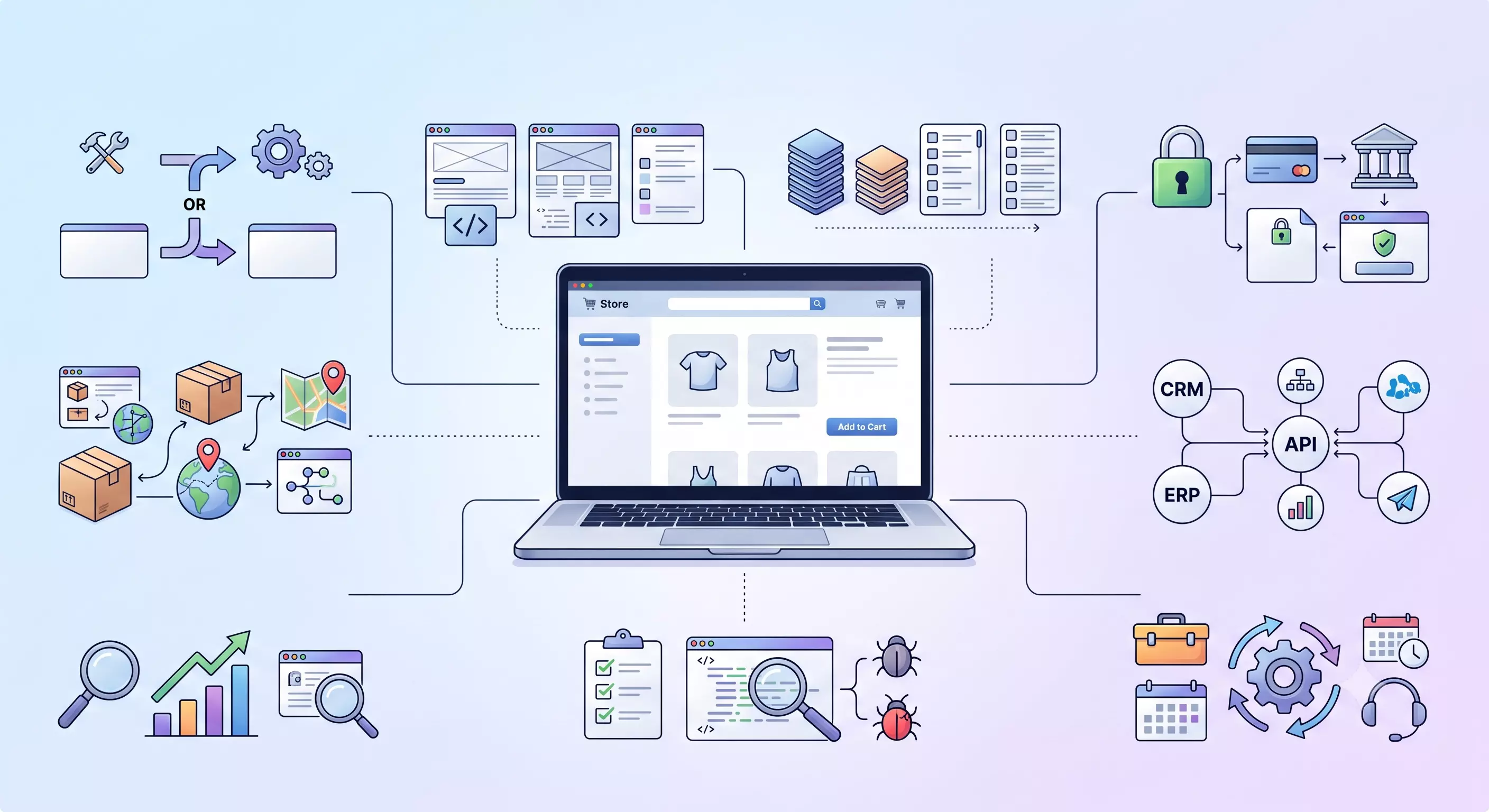
7 Key Factors That Shape Ecommerce Website Development Costs
Building an ecommerce website involves more than selecting a theme and uploading a few products. The final budget depends on what the store needs to do, how much customization is required, and how smoothly all its systems must work together.
Two ecommerce websites may look similar to customers but have completely different development requirements behind the scenes. A small store with standard checkout features will usually require less work than a large catalog with subscriptions, advanced filters, wholesale pricing, or third-party integrations.
Platform Choice
The ecommerce platform is one of the first decisions that affects the development budget.
Hosted platforms can include important features such as hosting, security, checkout, and basic store management. Other platforms may offer greater control but require separate hosting, plugins, security management, and regular technical maintenance.
The right choice depends on the size of the business, available budget, internal technical skills, product catalog, and future growth plans. Selecting the wrong platform early can lead to expensive migrations or redevelopment later.
Template Design or Custom Design
A store built with an existing theme normally costs less than a completely custom ecommerce design. Theme-based development may include changing colors, typography, navigation, homepage sections, and product-page layouts.
Custom design requires more planning. Designers may need to create wireframes, mobile layouts, unique page structures, branded visual elements, and conversion-focused sections.
This additional work can improve the customer experience, but it also increases design and development time.
Number of Products and Variations
A store with twenty straightforward products is easier to prepare than one containing hundreds or thousands of items. A larger catalog may require category planning, product filters, bulk imports, image preparation, inventory rules, and search functionality.
Product variations also affect the workload. Sizes, colors, materials, bundles, personalized options, subscription choices, and different pricing rules all require additional setup and testing.
Custom Features and Store Functionality
Standard ecommerce features are usually easier to configure because they are already supported by the platform. Development costs increase when a business needs functionality created specifically for its operations.
Examples may include:
- Advanced product filtering
- Subscription ordering
- Customer membership areas
- Wholesale or tiered pricing
- Product personalization
- Marketplace vendor dashboards
- Quote-request systems
- Custom checkout rules
Before approving custom development, businesses should separate essential launch features from improvements that can be added later. This helps control the initial budget without limiting future growth.
Payment, Shipping and Tax Setup
Basic payment and shipping settings may be quick to configure. Costs can increase when a store accepts several payment methods, supports multiple currencies, calculates real-time carrier rates, serves international customers, or uses complicated tax rules.
Every checkout option should also be tested on desktop and mobile devices. A feature that appears correctly on a product page may still create errors during payment, shipping selection, discount application, or order confirmation.
Read: Top Ecommerce App Development Firms
Third-Party Integrations
Many ecommerce businesses connect their websites to other systems. These may include email marketing software, accounting platforms, inventory tools, customer relationship management systems, shipping providers, analytics services, review platforms, and marketplaces.
Each integration requires configuration and testing. Older or highly customized business systems may also need additional development to exchange information correctly with the ecommerce platform.
SEO and Content Preparation
An ecommerce website needs a clear search-friendly structure before launch. This can include category planning, clean URLs, page titles, product descriptions, image alt text, internal links, structured data, redirects, and technical crawl checks.
Content preparation can also affect the budget. Product photography, image editing, copywriting, category descriptions, buying guides, size charts, and product uploads may not be included in a basic development quote.
Business owners comparing proposals should review a detailed guide to ecommerce website development costs so they can identify expenses that may be missing from an initial estimate.
Testing, Migration and Launch Support
Testing is an important part of ecommerce development. Developers should check product pages, account creation, search, filters, cart behavior, discount codes, checkout, payments, order emails, mobile layouts, and browser compatibility.
Moving an existing store can add further work. Product data, customer information, order history, blog content, URLs, images, redirects, and tracking systems may all need to be transferred carefully.
Launch support should also be included in the project scope. Small problems often appear only after real customers begin using the website.
Ongoing Maintenance
The development budget should not end on launch day. Ecommerce stores require regular updates, backups, security checks, app or plugin maintenance, speed monitoring, checkout testing, and technical support.
Businesses should ask whether post-launch support is included, how long it lasts, and what future updates will cost. A low initial quote can become expensive when essential maintenance and support are charged separately.
How to Compare Ecommerce Development Quotes
Do not compare proposals only by their final price. Check what each quote includes and excludes. A useful proposal should clearly explain:
- The selected platform
- The pages and templates included
- The number of products to be uploaded
- The design and customization scope
- Payment and shipping configuration
- Required apps or integrations
- SEO and analytics setup
- Testing and revision rounds
- Launch assistance
- Maintenance options
A cheaper proposal may exclude product entry, mobile optimization, SEO, integrations, testing, or post-launch support. A more detailed quote makes it easier to understand the real project cost and avoid unexpected charges.
Final Thoughts
Ecommerce website development costs are mainly shaped by the store's complexity, not simply its appearance. Platform selection, catalog size, custom features, integrations, content, testing, and ongoing maintenance all contribute to the final investment.
Businesses planning a new store should define their essential features, prepare product information early, and request a detailed scope before development begins.
GFXSAGA provides ecommerce design, development, SEO, and digital marketing support for businesses that need a professional and growth-ready online store.