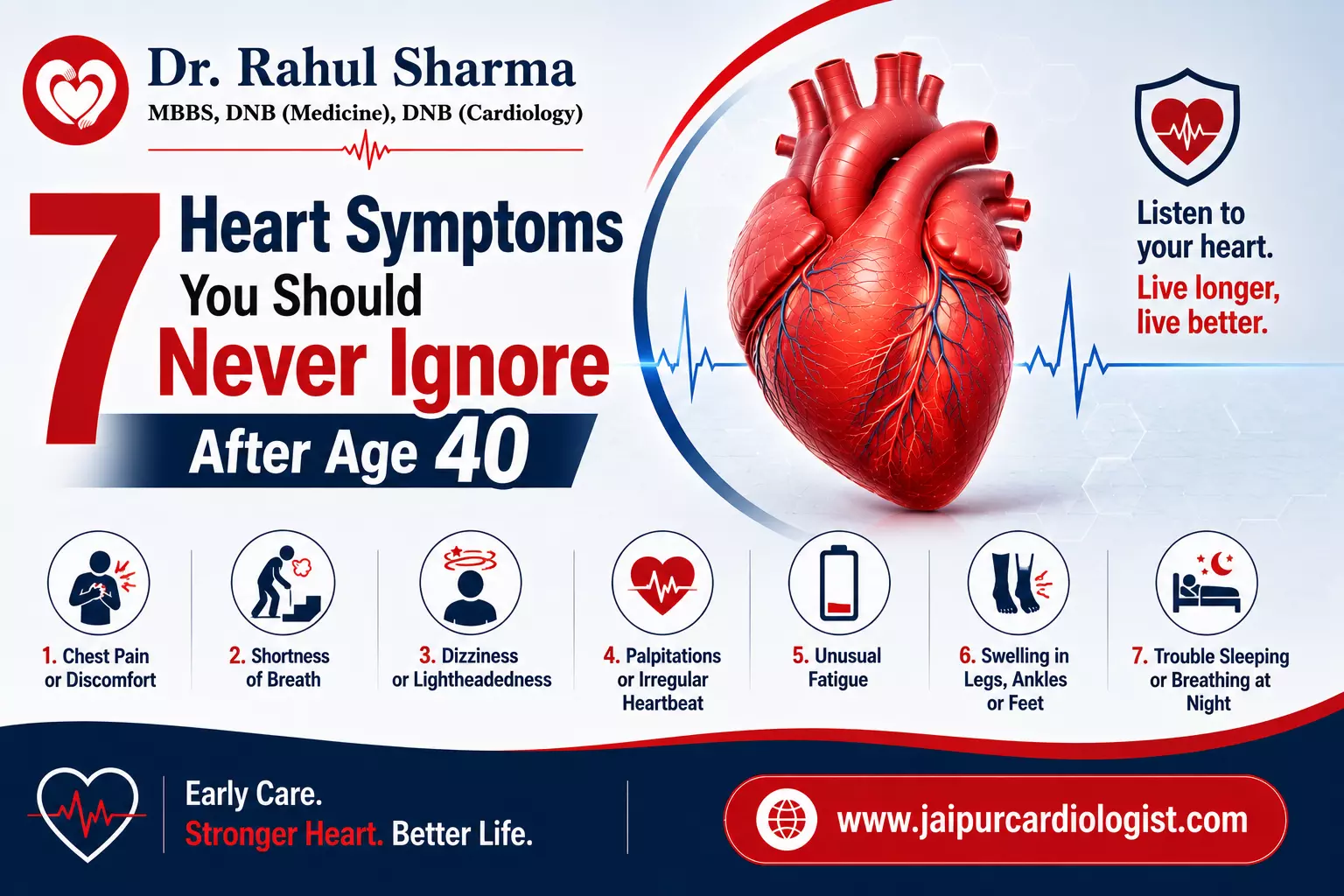
7 Heart Symptoms You Should Never Ignore After Age 40
Turning 40 does not mean that heart problems are bound to happen. But it is an age when paying closer attention to your cardiovascular health becomes increasingly important. Blood pressure, cholesterol, blood sugar, weight, stress, sleep, and lifestyle habits can all influence the heart over time.
One of the biggest mistakes people make is waiting for severe chest pain before taking a heart-related symptom seriously. Heart problems can sometimes begin with subtle changes that are easy to blame on tiredness, acidity, ageing, or a busy routine.
Knowing which symptoms deserve medical attention can help you act at the right time. If you are looking for an experienced Heart Doctor in Jaipur, a timely cardiac evaluation can help determine whether a symptom is harmless or needs further investigation.
1. Chest Discomfort That Keeps Coming Back
Chest discomfort is one of the symptoms people should never casually ignore, particularly after 40.
Heart-related discomfort may feel like pressure, heaviness, tightness, squeezing, or burning rather than sharp pain. It may appear while walking, climbing stairs, exercising, or during emotional stress and sometimes improve after resting.
The discomfort can also spread to the shoulder, arm, neck, jaw, or back.
Not every episode of chest discomfort is caused by the heart. Acidity, muscle strain, anxiety, and several other conditions can produce similar sensations. The problem is that it is difficult to determine the cause based on the feeling alone.
Repeated or unexplained chest discomfort deserves proper medical assessment. A Chest Pain Treatment Doctor in Jaipur can evaluate the symptoms along with your medical history and cardiovascular risk factors.
2. Getting Breathless During Activities You Previously Managed Easily
Have you recently started getting out of breath while climbing stairs that never used to bother you?
A gradual reduction in exercise tolerance can easily be dismissed as ageing or lack of fitness. Sometimes, however, unusual breathlessness may be related to the heart.
When the heart is unable to pump efficiently or when the heart muscle is not receiving enough blood, physical activity can become more difficult.
Breathlessness may also have lung-related or other causes, so it should not automatically be considered a heart problem. What matters is a noticeable change from your normal level of activity.
If ordinary tasks suddenly require more effort or frequent breaks, discussing the change with a doctor is sensible.
Read: Meet the Best Cardiologist in Jaipur: Expert Care for Every
3. Unusual Tiredness That Does Not Go Away
Everyone feels tired after a demanding day. Persistent exhaustion is different.
If you are sleeping reasonably well but still feel unusually drained, have less energy for normal activities, or find yourself avoiding activities that you previously enjoyed, it may be worth finding out why.
Some heart conditions can reduce the body's ability to receive adequate blood and oxygen during activity. In certain patients, unexplained fatigue may appear before more familiar cardiac symptoms.
Fatigue alone does not diagnose heart disease. But when it is persistent, unexplained, or accompanied by breathlessness, chest discomfort, dizziness, or reduced exercise capacity, it deserves attention.
4. A Fast or Irregular Heartbeat
Occasionally feeling your heart beat faster after exercise, excitement, or stress is normal.
The concern is when your heartbeat suddenly becomes very fast, feels irregular, skips repeatedly, or starts without an obvious reason.
Some people describe this sensation as fluttering, pounding, racing, or a feeling that the heart is briefly stopping and restarting.
Palpitations can occur because of stress, caffeine, dehydration, certain medicines, thyroid problems, or abnormal heart rhythms.
If they happen frequently, last for a significant period, or occur with dizziness, fainting, chest discomfort, or breathlessness, medical evaluation becomes particularly important.
An ECG and other cardiac investigations may help identify whether an abnormal rhythm is responsible.
5. Swelling in Your Feet or Ankles
Swelling around the feet and ankles is another symptom that deserves attention when it is persistent or unexplained.
There are many possible causes, including prolonged sitting, certain medications, kidney problems, vein-related conditions, and other health issues.
However, fluid retention can also occur when the heart is struggling to pump blood effectively.
When the heart's pumping ability becomes impaired, fluid may accumulate in parts of the body, particularly the legs and feet. Some people may also notice increasing breathlessness, difficulty lying flat, or waking at night feeling short of breath.
These symptoms can sometimes occur with heart failure and should not simply be attributed to getting older.
Patients who have persistent swelling along with breathlessness or reduced stamina may benefit from evaluation by a specialist providing Heart Failure Treatment in Jaipur.
6. Dizziness or Fainting Without a Clear Reason
A brief episode of dizziness can happen because of dehydration, low blood sugar, standing up suddenly, or several other reasons.
Repeated dizziness, however, should not be ignored.
Certain heart rhythm problems can cause the heart to beat too quickly, too slowly, or irregularly, temporarily reducing blood flow to the brain. This may result in dizziness, weakness, or even fainting.
Fainting during physical activity is particularly important to discuss with a doctor.
The cause may not be cardiac, but identifying the reason is important because some underlying conditions require treatment.
7. A Sudden Change in Your Usual Physical Ability
One of the most overlooked warning signs is simply feeling different during activities that were previously normal for you.
Perhaps your daily walk has become harder. Maybe you now need to stop halfway while climbing stairs. You may notice that you cannot carry out routine physical tasks without becoming unusually tired or breathless.
This type of change can happen gradually, making it easy to overlook.
Your own previous level of activity is often a useful reference point. If your physical capacity has noticeably declined without an obvious explanation, it is worth discussing with a cardiologist.
Why Symptoms Can Become Easier to Dismiss After 40
After 40, people often become accustomed to blaming physical changes on age.
A little tiredness becomes "normal." Breathlessness is blamed on being out of shape. Chest discomfort is assumed to be gas. Occasional palpitations are attributed to stress.
Sometimes those explanations are correct.
But assuming that every new symptom is simply part of ageing can delay the diagnosis of a genuine heart problem.
The safer approach is not to panic over every symptom but to pay attention to changes that are new, repeated, worsening, or associated with other warning signs.
Your Risk Factors Matter Too
Symptoms are only one part of assessing heart health.
Your risk may be higher if you have high blood pressure, diabetes, high cholesterol, obesity, a sedentary lifestyle, tobacco use, or a family history of cardiovascular disease.
Even without symptoms, these factors may justify periodic cardiovascular assessment.
Blood pressure is particularly important because hypertension can remain unnoticed for years. Over time, uncontrolled blood pressure can increase the strain on the heart and contribute to coronary artery disease and heart failure.
What Happens During a Cardiac Evaluation?
A cardiologist does not diagnose heart disease from one symptom alone.
The evaluation may begin with your medical and family history, followed by a physical examination and blood pressure measurement.
Depending on your symptoms and risk profile, the doctor may recommend an ECG, echocardiography, blood tests, stress testing, or coronary imaging.
If coronary artery disease is suspected, further evaluation can help determine whether there is a significant narrowing in the arteries supplying the heart.
The purpose of these investigations is to understand what is actually happening rather than making assumptions based on symptoms alone.
Do Not Wait for Severe Pain
A heart attack does not always begin with dramatic, unbearable chest pain.
Some people experience milder discomfort, unusual breathlessness, sweating, nausea, weakness, or pressure in areas other than the chest.
If you experience sudden or severe chest discomfort, significant breathing difficulty, fainting, cold sweating, or discomfort spreading to the arm, shoulder, jaw, or back, seek emergency medical attention rather than waiting for the symptoms to disappear.
Early treatment can be extremely important when a serious cardiac event is occurring.
Comprehensive Heart Care With Dr. Rahul Sharma
After 40, understanding your cardiovascular risk becomes an important part of maintaining long-term health.
Dr. Rahul Sharma is an experienced Heart Doctor in Jaipur, with qualifications including MBBS, DNB (General Medicine), and DNB (Cardiology) and more than 20 years of experience in advanced cardiovascular care.
His areas of clinical expertise include chest pain evaluation, coronary angiography, coronary angioplasty, stent placement, hypertension management, preventive cardiology, emergency heart attack treatment, and heart failure care.
Patients experiencing unexplained or recurring chest discomfort can seek evaluation for Chest Pain Treatment Doctor in Jaipur services to identify the possible cause rather than assuming that the symptoms are simply related to acidity or stress.
For patients with symptoms or conditions affecting heart function, appropriate assessment and individualized Heart Failure Treatment in Jaipur can help manage the condition and support long-term cardiac health.
Final Thoughts
After 40, your heart does not need constant worry—it needs attention.
Recurring chest discomfort, unusual breathlessness, unexplained fatigue, persistent palpitations, swelling, dizziness, and a noticeable decline in physical ability can all have different causes. Some may be harmless, while others may point toward a cardiovascular problem that needs treatment.
The important thing is not to diagnose yourself from a symptom. It is to recognize when something has changed and get the right medical evaluation.
Taking a new or persistent symptom seriously today may help you understand your heart health better and prevent a small concern from becoming a much bigger problem later.