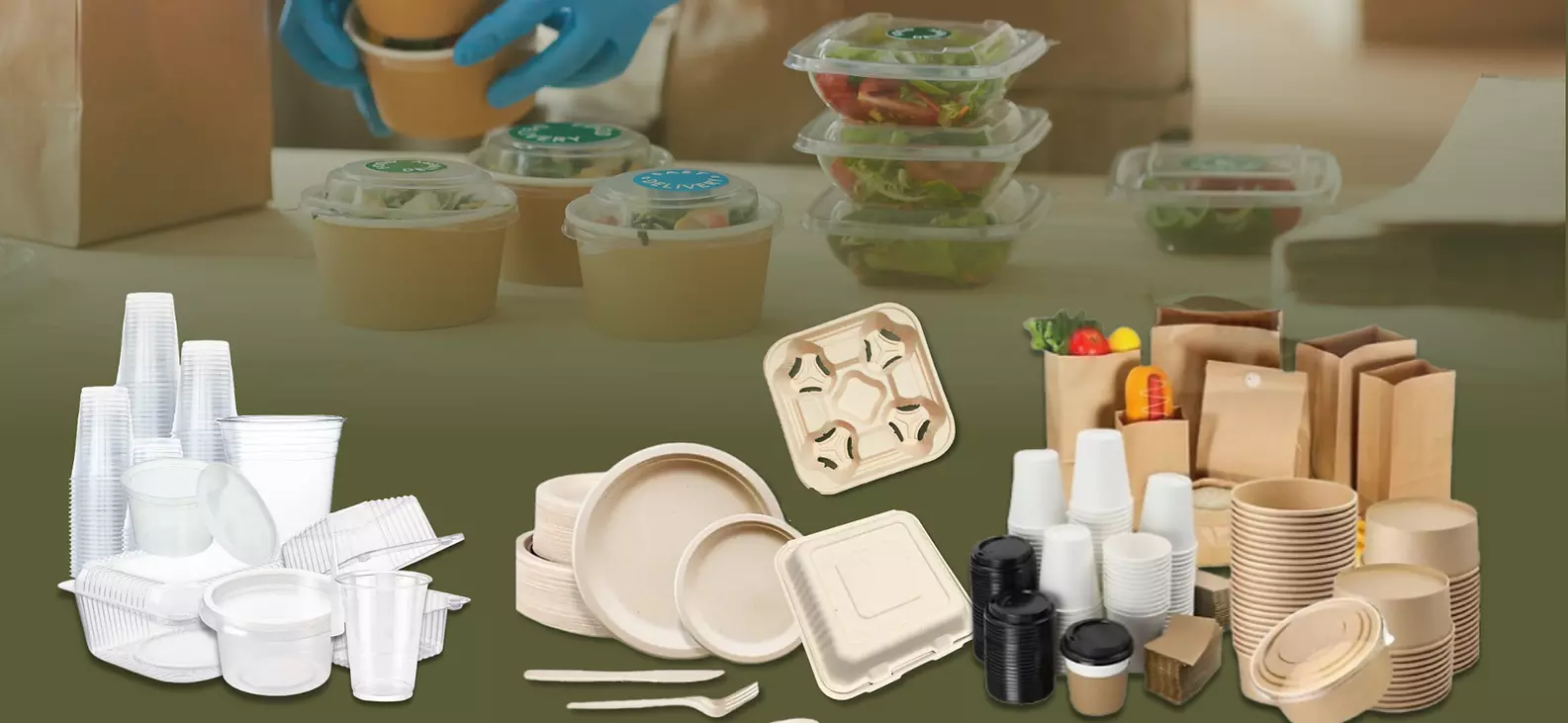
7 Eco-Friendly Packaging Materials Worth Knowing Before You Switch
If you buy packaging for a living, you already feel the pressure Eco-friendly Packaging . Customers aren't just judging what's inside a box anymore — they're judging the box itself.
Sustainable packaging has quietly moved from "nice extra" to "expected default," and that shift is happening fast across almost every industry.
The tricky part isn't deciding whether to switch. It's figuring out what to switch to. Walk into any supplier conversation and you'll hear a dozen material names thrown around — kraft, bagasse, molded pulp, PCR — often without much explanation of what actually separates one from another.
So here's a practical rundown of seven materials that show up again and again in real sourcing decisions, along with where each one genuinely earns its place.
1. Paper Packaging — The Easiest First Step
Paper is usually where companies start, and for good reason. It's light, it prints well, and most curbside recycling systems already accept it without any special sorting.
You'll typically see it used for:
- Tissue wrap in retail and clothing
- E-commerce mailers and envelopes
- Void fill and general protective wrapping
If sustainability claims matter to your customers, look for paper sourced from FSC-certified forests. That certification isn't just a sticker — it tells buyers the wood came from forestry that's actually managed responsibly.
For a brand making its first move away from plastic, paper is about as low-friction as the switch gets.
2. Kraft Packaging — Sturdy, Recyclable, and Honest by Design
Kraft paper comes from wood pulp run through the kraft chemical process, which is what gives it that unbleached, brown, slightly rugged look. It's recyclable, it biodegrades under the right conditions, and it's become something of a visual signal for "natural" branding.
Food brands, subscription boxes, and artisan sellers gravitate toward kraft a lot. Part of that is the sustainability angle — but honestly, part of it is also cost. Skipping the bleaching and heavy coating that white paperboard needs tends to bring printing costs down too.
It also just holds up. Kraft handles rough handling well, which is why it works for bags, wrap sheets, and outer cartons that need to survive a shipping journey in one piece.
3. Molded Pulp — Protection Built Around the Product
Molded pulp starts as recycled paper, newsprint, or leftover agricultural fiber. That fiber gets pulped, then pressed into molds shaped for whatever it needs to protect. It's the same basic material as an egg carton, though the applications have gotten a lot more sophisticated since then.
Because it can be molded to match a product's exact dimensions, it's become a real substitute for foam inserts and plastic trays — think electronics, glassware, cosmetics, medical devices. Anywhere something fragile needs a snug, cushioned fit.
It's compostable, biodegradable, and largely made from post-consumer content. For anyone trying to phase out expanded polystyrene, molded pulp is one of the few options with the structural muscle to actually replace it.
Read: Eco-Friendly Advantages of Two Piece Rigid Box Packaging
4. Bamboo Packaging — Grows Fast, Does a Lot
Bamboo matures in three to five years. Compare that to the decades a hardwood tree needs, and you start to see why bamboo-based packaging gets so much attention — the land-use footprint is dramatically smaller.
It can be turned into paper, rigid containers, films, and composite boards, which makes it flexible across a few different categories:
- Premium cosmetic jars and lids
- Food-grade takeaway containers
- Retail display packaging for lifestyle products
There's also a functional bonus — bamboo has some natural antimicrobial properties and a degree of built-in moisture resistance, which matters for food and personal-care items specifically. The catch is price.
Bamboo packaging generally costs more than conventional paperboard, so it tends to show up in premium product lines rather than budget ones.
5. Bagasse — Turning Sugar Waste Into Something Useful
Bagasse is the fibrous pulp left over once the juice has been pressed out of sugarcane. Instead of tossing it, manufacturers process it into a rigid, food-safe material that goes head-to-head with plastic and foam in foodservice.
What makes bagasse stand out is that it actually performs — it holds up to heat, moisture, and oil, which a lot of compostable materials struggle with. That's why it's a legitimate replacement for plastic clamshells and takeout containers, not just a symbolic one.
For anyone in food delivery, catering, or hospitality, bagasse checks both boxes: it's compostable in industrial facilities, and it takes a sugar-industry byproduct and gives it a second life. That's circular economy thinking in a pretty literal form.
6. Recycled Cardboard — The Reliable Workhorse
If you had to name the single most-used sustainable packaging material in global shipping, recycled cardboard would probably win. It's made from post-consumer waste paper and can be recycled again once it's done its job — a genuine closed loop.
For anyone sourcing shipping boxes, display units, or secondary packaging, recycled cardboard brings a solid mix of practical benefits:
- Strong enough for stacking and long-distance shipping
- Works fine with water-based and soy-based inks
- Widely available and cost-efficient at scale
It's not going to win any design awards, but for outer packaging and transit materials, it hits a balance of cost, durability, and environmental impact that's hard to beat.
7. PCR Plastics — Keeping Plastic Out of Landfills
Post-Consumer Recycled (PCR) plastic starts life as waste — bottles, films, containers people have already used and thrown away — before it's collected and reprocessed into new packaging.
It's worth being clear that PCR isn't virgin plastic, and it isn't biodegradable either. It plays a different role in the sustainability picture.
Using PCR cuts demand for new petroleum-based resin and keeps existing plastic out of landfills and waterways, all while keeping the properties that make plastic useful in the first place — barrier protection, flexibility, durability.
You'll see PCR content listed as a percentage in a spec sheet — 30%, 50%, sometimes 100%, depending on the material and use case. When a product genuinely can't avoid plastic packaging, PCR is usually the most responsible version of that choice available.
Picking the Right Material for Your Business
There's no universal winner here. The right pick depends on your product category, your supply chain, what end-of-life infrastructure actually exists in the markets you sell into, and what claims you actually want to be able to back up to customers.
Material
Best For
End-of-Life
Paper Packaging
E-commerce, wrapping
Recyclable, biodegradable
Kraft Packaging
Food, subscription, artisan
Recyclable, biodegradable
Molded Pulp
Electronics, fragile goods
Compostable, biodegradable
Bamboo
Premium, cosmetics, food
Biodegradable, compostable
Bagasse
Foodservice, hot food
Industrially compostable
Recycled Cardboard
Shipping, secondary packaging
Recyclable
PCR Plastics
Rigid containers, films
Recyclable (program-dependent)
Eco-friendly Packaging Before you commit to any of these, ask your supplier for material data sheets, composting certifications, and proof of recycled content. Sustainability claims are only as good as the paperwork sitting behind them.
Jishan Group works with businesses sourcing sustainable packaging at scale — from molded pulp solutions to kraft-based formats — helping buyers match the right biodegradable materials to their product requirements without compromising on performance or cost efficiency.
Visit the Jishan Group homepage to explore their packaging range.
Frequently Asked Questions
What's the single most eco-friendly packaging material?
There isn't one universal answer — it comes down to your product, your market, and what disposal infrastructure actually exists where you sell. Molded pulp, bagasse, and kraft tend to rank well for biodegradability and renewable sourcing, but the "best" material is the one that minimizes impact across its whole lifecycle, not just at one stage.
Is kraft packaging basically the same thing as recycled cardboard?
Not quite. Kraft comes from virgin wood pulp processed through the kraft chemical method, which is what gives it strength and that natural brown color. Recycled cardboard, on the other hand, is made from paper that's already been used once. Both are recyclable, but they come from different raw materials and tend to serve different purposes.
Can molded pulp actually replace foam inserts?
For most applications, yes. It can be custom-shaped to fit a product almost exactly, giving cushioning that's comparable to expanded polystyrene, while also being biodegradable and made from recycled content. It's become a common swap for foam in electronics, cosmetics, and glass packaging.
What does PCR actually stand for?
Post-Consumer Recycled. It's plastic that's already been used by consumers, collected, reprocessed, and turned into new packaging material. It's usually expressed as a percentage of the total material in a spec — say, 50% PCR content.
Can bagasse handle hot food without falling apart?
Yes — it's heat-resistant, oil-resistant, and food-safe, which makes it a reliable choice for hot meals, soups, and greasy food. It's one of the few compostable materials that genuinely performs well in foodservice conditions where plastic or foam used to be the default.
How do I know a supplier's sustainability claims are actually real?
Ask for documentation, not just marketing language. Look for FSC certification for paper-based products, BPI or DIN CERTCO for compostability claims, and GRS or SCS Global Services for verified recycled content. A supplier that's confident in its claims will hand over test results and data sheets without much pushback.