10 HVAC Marketing Mistakes That Could Be Costing Businesses Leads
Common HVAC marketing mistakes often involve neglecting local search profiles, failing to respond to leads quickly, and using websites that do not work well on mobile devices.
To fix these issues, owners must prioritize accurate data tracking and ensure the service area is clearly defined for search engines.
Fixing these errors helps a business capture more calls and improves the return on investment. This guide provides a detailed look at where most service businesses go wrong and how they can correct their path to steady growth.
Years of observing the home services sector show that many owners lose money by repeating the same outreach errors.
1. Neglecting the Google Business Profile
Many owners think a website is enough to get found online. However, a Google Business Profile is often the first thing a homeowner sees when their air conditioner breaks.
If a profile lacks photos, updated hours, or a verified address, the business will lose out to competitors who appear more active.
Owners should regularly post updates and photos of the team at work. This activity signals to search engines that the business is operational and reliable.
High-quality images of branded vans and professional uniforms help build trust before a customer even calls.
2. Failing to respond to leads within minutes
Speed is everything in the service industry. If a potential customer fills out a form on a site and does not hear back for three hours, they have already called three other companies. Slow response times are among the most expensive HVAC marketing mistakes a company can make.
Bonus Tip: Use automated text messaging to acknowledge new leads immediately. A simple message saying the request was received and a call is coming shortly can stop customers from looking elsewhere.
3. Using a website that is not mobile-friendly
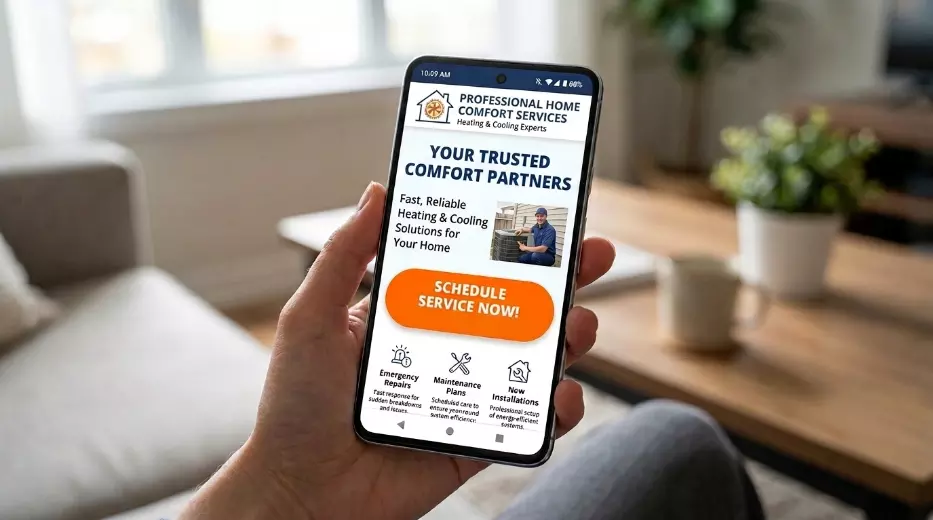
Most homeowners search for emergency repairs on their smartphones while standing in a hot or freezing house. If a site takes too long to load or requires users to zoom in to read text, they will leave immediately. A poor mobile experience ruins HVAC digital marketing efforts.
The site must have "click to call" buttons that are easy to find. If a user has to search for a phone number, the lead is often lost. Ensure the most important information is at the very top of the screen.
Read: Best Digital Marketing Company in India: How to Choose
4. Ignoring the power of online reviews
Customers trust their neighbors more than they trust advertisements. A lack of recent, positive reviews makes a business look stagnant or untrustworthy. Companies must have a system in place to ask every satisfied customer for a review right after the service is completed.
Negative reviews are not the end of the world, but ignoring them is a mistake. Responding professionally to complaints shows potential clients that the business cares about quality and customer satisfaction. It demonstrates accountability, which is a trait homeowners value highly.

5. Not tracking where leads originate
If a business does not know which ads are making the phone ring, it is likely wasting money. Many businesses spend thousands on HVAC advertising without knowing if the calls came from Google, Facebook, or a local flyer. This lack of data makes it impossible to scale success.
Contractors should use unique tracking phone numbers for different campaigns. This allows them to see exactly which marketing channel provides the best leads. By focusing the budget on what works, a company can lower the cost per lead significantly.
Marketing Channel
Common Mistake
Better Approach
Local Search
Incomplete business profile
Daily posts and verified photos
Paid Ads
Sending traffic to the home page
Using specific landing pages
Only sending sales pitches
Sending maintenance tips and reminders
Social Media
Posting inconsistently
Sharing real-time job site photos
6. Writing generic or unhelpful content
Homeowners often search for solutions to their problems before they decide to hire a pro. If a blog or social media account only says "Call us for repairs," the business is missing an opportunity. Providing educational content about thermostat settings or filter changes builds authority.
When a contractor helps a homeowner understand their system, that homeowner is more likely to choose them when a major repair is needed. Avoid using industry jargon that might confuse a regular person. Use plain language to explain how different systems work and why regular maintenance matters.
7. Failing to target the right audience
While quality content builds authority, a lack of specific targeting is often why lead quality suffers. If advertisements are too broad, they attract people looking for the lowest price rather than those looking for quality service.
Owners must define the ideal customer by location, income level, and specific service needs.
Targeting homeowners in specific zip codes helps ensure the team is not driving across the county for small jobs. Precise targeting improves HVAC lead generation results by connecting the business with people who are ready to book a service call right now.
8. Underestimating the value of video
People want to know who is coming to their home. Using video on a website and social media allows a company to introduce technicians and show the process. Static images are fine, but video captures attention much more effectively.
Market data shows that including a video on a landing page can increase conversion rates by a large margin.
Owners do not need a professional film crew for every post. Simple videos of a technician explaining a common issue can be very effective for building rapport.
9. Forgetting about existing customers
It is much cheaper to keep a customer than to find a new one. Many HVAC marketing mistakes center on chasing new leads while ignoring people who have already used the services.
If a business does not stay in touch, customers might forget the name by the time they need maintenance next year.
Bonus Tip: Send seasonal reminders via email or text. Reminding a customer to schedule a spring AC tune-up in March keeps the brand top of mind and fills the schedule before the summer rush starts.
10. Failing to plan for seasonal changes
HVAC is a seasonal business, but marketing efforts should not be. If a company waits until the first heatwave to start ads, it is already behind. Campaigns must be planned months in advance to ensure a steady flow of work during the "shoulder" seasons.
In colder climates, focus on furnace safety and efficiency during the autumn. In humid regions, emphasize dehumidification and indoor air quality. Tailoring the message to the current weather and local climate demonstrates that a business understands the specific needs of the community.
Things to consider before updating a strategy
Before a business changes its marketing plan, the owner should look at current data. They need to know the average customer acquisition cost and the current conversion rate. Changing too many things at once makes it hard to see what is actually working.
Consider the following factors before making a move:
- The current staff capacity to handle more leads.
- The specific services that bring in the most profit.
- The geographic areas where the business wants to grow.
- The software used to track customer interactions.
- The budget that can be realistically sustained for at least six months.
Reviewing actionable next steps
Correcting these errors requires a mix of technical updates and better communication habits. Start by optimizing local profiles and ensuring the website is fast and easy to use on a phone.
Track every lead so the business can stop spending money on ads that do not work. By focusing on existing customers and responding to new leads instantly, companies will see a much better return on their efforts.
Review current marketing performance and decide which of these areas needs the most immediate attention.
How to get expert help with HVAC business growth
Improving marketing can be a heavy lift when owners are busy running a service company.
Genius Marketing provides specialized support for home service businesses looking to increase call volume. If owners want to stop making common mistakes and start seeing real results, they can contact the team for a free quote.
Common questions about service industry marketing
How often should owners update a Google Business Profile?
The goal should be to post at least once a week. Adding new photos of the team or completed jobs every few days is even better for local rankings.
What is a good response time for a new lead?
Ideally, a response should occur within five minutes. Research shows that lead conversion rates drop significantly after the first ten minutes of waiting.
Is a blog necessary for an HVAC site?
Yes, because it helps the business show up for "how-to" searches. Educational content builds trust and keeps the website fresh in the eyes of search engines.
Is Facebook advertising effective for HVAC?
It can be very effective for maintenance offers and branding. It works best when owners target specific demographics and use high-quality photos of local work.
How much should a company spend on marketing each month?
Most healthy service companies spend between 5% and 10% of their gross revenue on marketing. This varies based on growth goals and local competition.