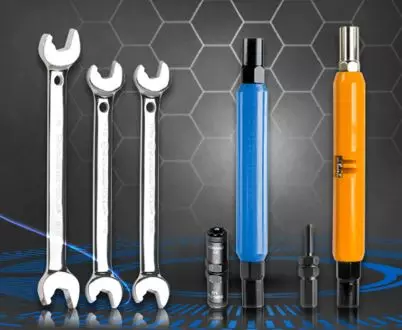
10 Essential Things to Know About Wrenches and Adjustable Wrench Tools
Wrenches are fundamental hand tools used to tighten, loosen, and hold nuts, bolts, and other fasteners. They are used across electrical, telecommunications, fiber optic, low voltage, utility, maintenance, and general mechanical applications.
Because fasteners come in different sizes and configurations, choosing the appropriate wrench can make fastening work more controlled and efficient.
Among the different options available, adjustable wrench tools are particularly versatile because their jaws can be changed to accommodate different fastener sizes.
However, adjustable wrenches are only one type of wrench. Understanding the different designs, features, and applications can help professionals select the right tool for their work.
Here are 10 important things to know about wrenches and adjustable wrench tools.
1. Understand What a Wrench Does
The primary purpose of a wrench is to apply controlled turning force to a fastener. Depending on its design, a wrench may grip a nut, bolt, connector, or other piece of hardware.
Wrenches are available in many configurations because different jobs require different levels of access, fastener sizes, and handling characteristics.
For technicians, having the appropriate wrench available can simplify installation, maintenance, and repair work. Jonard Tools manufactures a broad selection of wrenches for applications including telecommunications, fiber optics, low voltage, electrical, and other technical industries.
2. Know the Different Types of Wrenches
Not every wrench is designed for the same application. Common categories include adjustable wrenches, torque wrenches, can wrenches, speed wrenches, and other specialized designs.
Each type addresses a particular fastening requirement.
For example, adjustable wrenches can accommodate multiple fastener sizes, while torque wrenches are designed for applications where controlled torque is important. Specialized wrenches may be designed for connectors, utility hardware, or restricted access applications.
Understanding these differences helps users avoid choosing a tool based only on appearance or size
.
3. Learn Why Adjustable Wrenches Are Versatile
One of the main advantages of adjustable wrench tools is their ability to work with different fastener sizes.
Instead of having a separate fixed size wrench for every fastener, an adjustable wrench uses a movable jaw that can be positioned according to the size of the hardware.
This makes adjustable wrenches useful for technicians who regularly encounter different fasteners. They can also reduce the number of individual tools required in a portable toolkit.
Jonard's adjustable wrench range includes multiple sizes, from compact 4-inch models through larger 18-inch versions.
4. Consider Jaw Capacity When Selecting a Wrench
Jaw capacity determines the maximum size of fastener that a particular adjustable wrench can accommodate.
A small adjustable wrench is useful for smaller hardware and applications where space is limited. Larger models can accommodate bigger fasteners and provide a longer handle for applications requiring greater leverage.
For example, Jonard's 4-inch AW-4 has a jaw capacity of 0.511 inches (13 mm), while its 12-inch AW-12 provides a jaw capacity of 1.5 inches (38 mm). The 18-inch AW-18 has a 2.08-inch (53 mm) jaw capacity.
Selecting the wrench based on both fastener size and available workspace helps ensure an appropriate fit.
5. Pay Attention to Wrench Size
The overall length of a wrench affects how it handles in different applications.
Shorter wrenches are generally easier to carry and can be convenient in confined work areas. Longer wrenches can provide greater reach and may be useful for larger hardware.
However, a larger wrench is not automatically the right choice. The wrench should be appropriate for the fastener and the available working space.
Jonard's adjustable wrench lineup includes 4, 6, 8, 10, 12, 15, and 18-inch options, providing different combinations of size, reach, and jaw capacity.
6. Look for an Easy to Adjust Jaw Mechanism
The adjustment mechanism is an important part of an adjustable wrench. A properly designed worm gear allows the movable jaw to be positioned according to the fastener.
Jonard's adjustable wrenches use precision-formed knurled worm gears designed for smooth adjustment. The tools also include English and metric scales on the sides of the jaws, allowing users to make faster adjustments.
A clear adjustment system can be especially useful when working with multiple fastener sizes throughout the day.
7. Consider the Materials and Construction
The material used to manufacture a wrench can affect its strength, durability, and suitability for repeated professional use.
Jonard's adjustable wrench models are made using chrome vanadium steel or high carbon steel depending on the model, with forging and heat treatment used across the range for strength and durability. Many models also feature a chrome finish.
For professional toolkits, construction quality is an important consideration because hand tools may be subjected to frequent use and demanding working conditions.
8. Choose a Comfortable Handle Design
A wrench may be used repeatedly throughout a workday, making handle design an important consideration.
A wider, ergonomically designed handle can provide a more comfortable gripping surface. Jonard's adjustable wrenches feature vinyl dipped wide handles designed with user comfort in mind.
Comfort does not replace correct tool selection or safe working practices, but a well designed handle can make routine fastening tasks more manageable.
9. Match the Wrench to the Application
Different industries can have very different wrench requirements.
Telecommunications
Telecommunications technicians may work with connectors, cabinets, hardware, and other equipment requiring specialized fastening tools. Compact or specialized wrench designs can be useful where access is restricted.
Electrical Work
Electrical technicians may use wrenches when installing and maintaining hardware, connectors, and equipment. The specific tool should be selected according to the fastener and application.
Utility Applications
Larger adjustable wrench tools can be useful for larger hardware. Jonard's 15-inch and 18-inch adjustable wrench models are listed for applications involving utility pole line hardware.
General Maintenance
Maintenance professionals often encounter different fastener sizes. An adjustable wrench can provide flexibility when a wide variety of hardware needs to be handled.
10. Build a Wrench Selection Around Your Work
The best wrench collection is one that matches the applications you encounter regularly.
A professional who works with small hardware may prioritize compact models, while someone handling larger fasteners may require longer wrenches with greater jaw capacity. Users who work across several applications may benefit from keeping multiple sizes available.
For example, Jonard offers the AW-6810 three piece adjustable wrench set containing 6, 8, and 10-inch models with extra wide jaws. This provides several sizes in one set for users who need more flexibility than a single wrench can provide.
When building a toolkit, consider:
- Typical fastener sizes
- Required jaw capacity
- Available working space
- Required reach
- Frequency of use
- Handle comfort
- Tool storage and portability
- Application specific requirements
Final Thoughts
Wrenches are essential tools for fastening, installation, maintenance, and repair work across many industries. While fixed size and specialized wrenches have specific applications, adjustable wrench tools provide flexibility by accommodating different fastener sizes with a movable jaw.
When selecting a wrench, consider more than its overall length. Jaw capacity, adjustment mechanism, construction material, handle design, and the intended application can all influence which tool is appropriate.
A well organized collection of appropriately sized wrenches can give technicians greater flexibility when working with different types of hardware.
By understanding the differences between wrench designs and selecting tools according to the actual requirements of the job, professionals can build a practical hand tool collection suited to their everyday work.