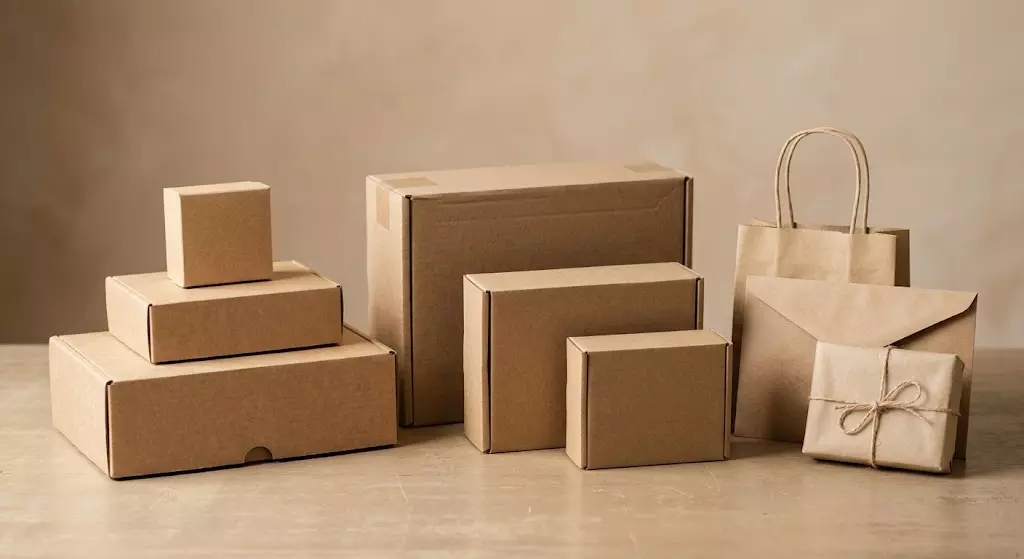
10 Affordable Packaging Ideas for Small Businesses
Packaging costs can add up, for small businesses, especially if you place orders often and have a small budget. After all, quality packaging not only protects the product and its appearance, but also saves on shipping costs.
Fortunately, there are cost-effective options that allow companies to save money without compromising on quality. Small businesses can find a wide variety of boxes at Printed Boxes Wholesale to select the most appropriate packaging for their products.
There are many ways to reduce packaging costs for small businesses and still provide an adequate product appearance.
In addition, proper storage and the choice of compatible boxes will eliminate the need for costly cardboard boxes. For instance, kraft boxes wholesale may be selected or another type of affordable packaging.
1. Choose Kraft Boxes for Everyday Products
Kraft Boxes are excellent for packaging candles, handmade soap, accessories, and other small items. Besides, the neutral natural brown color of kraft cardboard boxes looks good with all logos and brand packaging designs.
In addition, a company can personalize the Kraft boxes by adding custom printing elements such as logos, product descriptions, and brand colors.
Plain kraft boxes tend to be more affordable than those with complex patterns and logos. Using small logos and labels to mark the boxes as your brand’s packaging can help you save money. Small businesses can use economy-sized labels to mark boxes with their brand name and logo affordably.

2. Use Paper Bags for Lightweight Items
Paper bags can be used for clothing, small gifts, bakery items, and goods from local markets. They are easy to store and come in various sizes suitable for any inventory.
For affordable packaging ideas for small businesses, paper bags are a great option for items that do not need a hard or stiff package.
A simple bag with a ribbon or a paper tag can look nice and will not cost much. It is important to choose the right paper thickness for the products sold in them, especially if the customer will have to carry them away.
3. Buy Packaging in Bulk
The more boxes or bags you buy at once, the cheaper they will be. This is a good option for companies that ship the same type of goods year after year.
Before buying a large quantity of boxes or bags, make sure that you will actually use them. You should look over your past sales and guestimate how much you will need to buy.
If you have different sizes or products that you ship, or if you tend to change them often, you might decide that buying several thousand of the same size boxes isn't the best option. It's important to compare unit cost, shipment charges, storage space needed, and minimum quantity when buying in bulk.
4. Select the Right Box Size
Oversized boxes are not only wastes of space, since they often require extra filler material to keep things from shifting during transport. They can also cost you more in shipping fees, depending on the carrier.
Measure your products to see what size boxes you'll need. Leave enough room for protective filler materials, but avoid wasting space. A business that ships mugs, for instance, would need different packaging than one that ships folded T-shirts.
Testing different sizes before buying a supply is one of the simplest ways to discover Low Cost Packaging Solutions that will protect your products without costing you money.
5. Use Stickers Instead of Custom Printing
Custom printed packaging is great, but it might be too expensive for a start-up. Fortunately there is another option.
If you are low on budget, order some self-adhesive labels with your company logo, website address or even a simple thank you note.
You can stick them on just about anything: plain boxes, paper bags, tissue paper or mailers. You can even use different labels for different holidays or special offers, instead of buying new packaging every time.
Make sure to keep it simple by using a label the same size as the package. It's much nicer to see a small, simple design than to have to read all the information on a big label.
Read: Why Display Packaging Is Becoming the Real Difference-Maker
6. Try Paper-Based Protective Materials
Fragile products require careful packing to ensure they are not damaged during transportation and storage, but sometimes, expensive cushioning is not necessary. Paper, kraft wrapping paper, and corrugated inserts can be utilized successfully for various items.
For instance, a handmade candle might need a specially cut insert to hold it in place, while a ceramic ornament may need to be wrapped several times and placed in a heavy-duty box. The material should be selected based on the weight and delicacy of the product.
However, these cost effective product packaging ideas should still be tested before the actual orders are packed. A sample can be prepared, and it will be possible to see if it shifts inside the box or not.
If items are not held firmly and securely, they should not be shipped like that because it will lead to a higher number of damaged goods and significant losses.
7. Reuse Clean Packaging Materials When Appropriate
Businesses often receive supplies in boxes that remain in good condition. Reusing suitable cartons, paper padding, and other clean materials can reduce waste and limit spending.
Check every reused box for crushed corners, moisture damage, weak seams, or old shipping labels. Remove previous labels and cover outdated markings so the new shipment is clearly identified. Avoid reusing damaged cartons for heavy or fragile products.
If presentation matters to your customers, reserve reused materials for suitable shipments and use fresh branded packaging for retail orders or special gifts.
8. Keep Packaging Designs Simple
Complicated packaging can require extra printing, special finishes, custom inserts, and assembly time. A simpler design may deliver the same practical value at a lower cost.
Choose one or two brand colors, use a readable logo, and keep product information concise. For instance, a skincare business could use a plain box with a neat label rather than foil stamping and several decorative layers.
When comparing custom packaging ideas, ask suppliers which design features affect the price most. Removing an unnecessary finish or choosing a standard box structure may lower costs without changing the overall appearance significantly.
9. Use Mailers for Suitable Products
Poly mailers and paper mailers can be useful for shipping clothing, fabric accessories, and other products that do not need a rigid box. They take up less storage space and can weigh less than many boxed alternatives.
However, mailers are not suitable for every order. Products that can break, bend, leak, or lose their shape may need a stronger container. Check the material's tear resistance and closure before selecting it for regular shipping.
These cheap packaging ideas for small businesses work best when the mailer provides enough protection for the item and meets the carrier's shipping requirements.
10. Compare Wholesale Packaging Suppliers
The cost of packaging can depend on many factors: the size of the order, the materials, printing, delivery, and customization. By comparing the offers of different suppliers, you will get an idea of how much the cost of packaging can differ.
It is advisable to request a quote based on the required quantity. In addition, you should ask for references to verify the quality of samples, production time, shipping costs, and the possibility of additional charges for artwork or setup.
Thus, businesses that want to order printed boxes can compare the offers of several suppliers and choose the best option for them. Some manufacturers offer special promotions for first-time customers.
Moreover, when you want to start ordering, it is a good idea to request a sample, check the size, and see what the box looks like before buying. Perhaps a more expensive option will provide the necessary qualities and protect the contents from damage.